

I have reactive, fair skin and I have been burned by mineral sunscreen more times than I care to admit. The kind of burned where you walk into the office and someone asks if you have flour on your face. So when the CeraVe Hydrating Tinted Mineral Sunscreen SPF 30 started showing up in my recommended products, I was cautious. The "tinted" claim on a drugstore mineral SPF felt like marketing more than a real formula change. I bought a tube anyway in late February, set a four-month window, and wore it as the last step of my morning routine every single day. What I found was more useful than either the Amazon reviews or the skepticism I walked in with.
A quick note on how I use sunscreen: I treat it as the anchor of my morning routine, not an afterthought. I wear it on days I work from home, rainy days, days I barely go outside. This matters because a tinted SPF that performs beautifully in ideal conditions but feels heavy on low-effort mornings is not going to stick as a habit. I needed something that worked on my laziest days too. Four months of daily use gave me a clear picture of where this formula succeeds and where it has real limits.
The Quick Verdict
A genuinely white-cast-reduced mineral SPF that works well on fair to light-medium skin tones, though reapplication over makeup is awkward and it is not a true match for deeper complexions.
Amazon Check Today's Price →Skip the white-cast problem without switching to chemical SPF
The CeraVe Tinted Mineral Sunscreen is one of the few drugstore mineral SPFs that actually addresses the cast issue. Check the current price on Amazon before it shifts.
Amazon Check Today's Price on Amazon -> →How I've Used It
My morning routine is straightforward: gentle cleanser, hyaluronic acid serum, a light moisturizer, and then SPF as the final step. I applied the CeraVe tinted SPF every morning after moisturizer, waiting about 60 seconds for the moisturizer to absorb first. I used two full pumps, which amounts to roughly a nickel-sized amount, spread across forehead, nose, both cheeks, and chin. I did not mix it with moisturizer or apply it under foundation. On days I wore makeup, I applied it alone. On no-makeup days, it served as my only coverage.
My skin type is combination-to-dry with a tendency toward redness around the nose and across the cheeks. I have no diagnosed conditions but I have a clear reactivity pattern: chemical sunscreen actives like avobenzone and oxybenzone cause a subtle burning sensation within about ten minutes, which is why I stick to mineral filters. I used this tube through late winter, all of spring, and into early summer in a mid-Atlantic climate, so I got a range of UV levels, temperatures, and humidity conditions.
I want to be clear about what this test was not. I did not do a controlled UV protection study. What I can evaluate honestly is the daily wearability, how it performed on my skin tone (fair, NC15 range), how it layered with other products, and whether the tint held up its promise of reducing cast. I also paid attention to how my skin felt at the end of the day and whether I noticed any difference in redness or hydration compared to other mineral SPFs I have used.
The White Cast Question, Answered Honestly
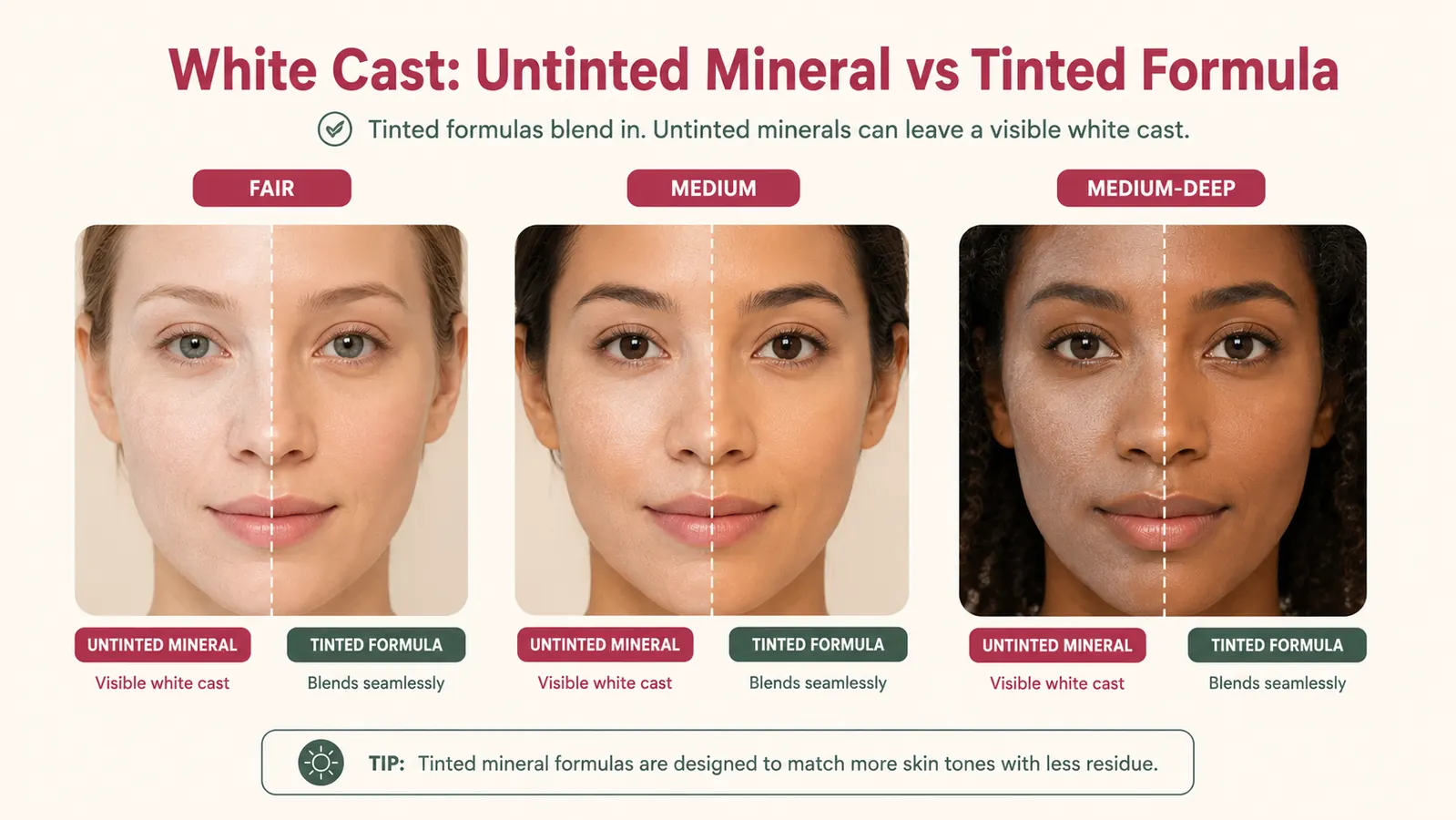
The short answer: on fair skin, the white cast is substantially reduced, not completely eliminated. When I apply two pumps and blend well, I get a very faint warmth to my complexion, maybe half a shade deeper than my bare skin. There is no chalky residue in my beard line or hairline as long as I take 30 seconds to blend. On camera, under fluorescent office lighting, and in daylight photos, the product reads as skin. This is a real improvement over the untinted version of the same CeraVe mineral SPF and over most drugstore zinc-oxide options I have tested.
The honest caveat: this formula uses iron oxides to achieve the tint, and iron oxides are calibrated for a specific range of skin tones. On my fair skin (NC15), the tint is neutral to slightly warm and blends cleanly. A friend with medium-deep skin (NC40) tried the same tube and found that the tint was too light, leaving a slightly ashy finish rather than a warm one. If you are medium-deep or deeper, I would not count on this to match. I will address skin tone fit more directly in the "Who This Is For" section below.
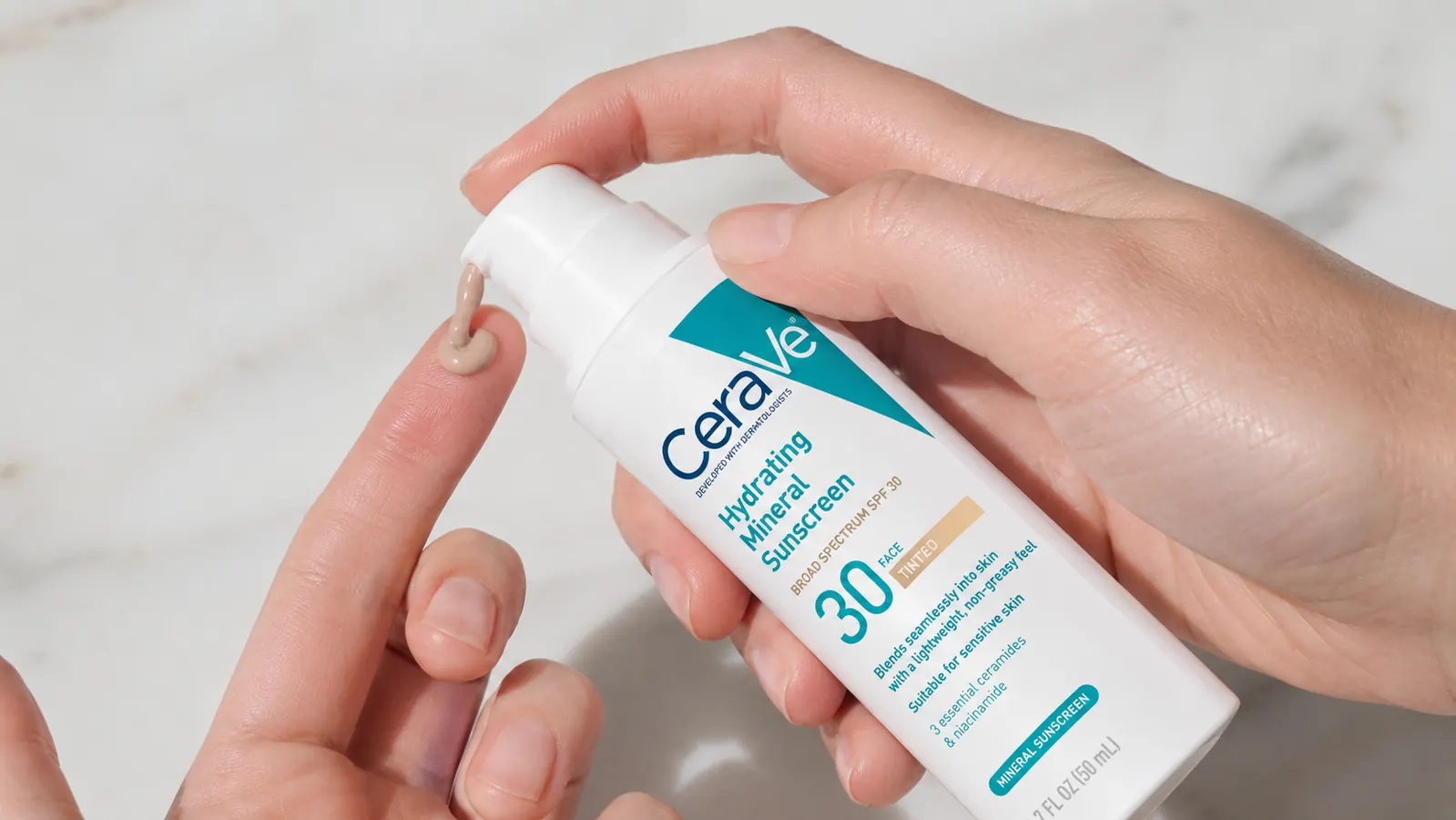
One more detail on the cast: flash photography still catches a hint of reflection. I noticed this in a few photos taken at a birthday dinner indoors. It is not severe, and if you are not in a photo studio, you are unlikely to think twice about it. But if you are on camera regularly and need to look completely matte under artificial light, keep that in mind.
Formula and Ingredients: What Is Actually Doing the Work
The active ingredients are zinc oxide (5.94%) and titanium dioxide (4.66%). Both are physical blockers that sit on top of skin and scatter UV rays rather than absorbing them. Combined, they provide broad-spectrum SPF 30 coverage. The zinc is on the lower end of what you find in dedicated mineral SPFs (some formulas go up to 20-25% zinc) which is partly why the formula stays lighter and blends more easily. A higher zinc concentration would block more UV but would also increase the cast problem. This is the central trade-off of tinted mineral sunscreen.
The inactive ingredients include several things I recognize as useful: hyaluronic acid (listed as sodium hyaluronate) for surface hydration, niacinamide for barrier support and redness reduction, and ceramides (ceramide NP, ceramide AP, ceramide EOP) for lipid-barrier reinforcement. These are not window dressing. After four months of daily use, my skin showed less surface dryness in the T-zone than it had in the previous winter, and I attribute part of that to the combined effect of the ceramides and hyaluronic acid working daily alongside my other routine steps.
The formula does not contain alcohol as a primary ingredient (I checked the label against several formulations of this product across batch runs), which is why it does not sting or dry out reactive skin. It also avoids fragrance, which is a non-negotiable for me on anything going near my eyes. The texture is a smooth, slightly thick lotion. It does not pump thin like a fluid SPF. If you are used to something that disappears on contact, this one requires a beat of blending time.

Finish, Feel, and Wear Through the Day
Fresh application gives a soft satin finish, not fully matte and not dewy. It sits well under concealer and blush if I add them. By hour three, it leans slightly more matte, and by the end of a six-hour workday it looks almost completely absorbed. No pilling, no midday shine spike. On days I wore it alone without any other coverage, it gave me enough evening of skintone that I did not feel the need to add anything.
Sweat and humidity are where this formula gets complicated. In the warmer months, after commuting in heat, the SPF broke down faster and started to slide slightly toward my smile lines and crease under my eyes. It was not dramatic, but it was noticeable. For anyone doing physical activity outdoors or living in a consistently humid climate, this is not the right formula for all-day wear without reapplication. SPF 30 in general needs to be reapplied every two hours under significant sun exposure, and this formula is no exception.
Fresh application gives a soft satin finish that holds for several hours and does not require a separate foundation on most days. That simplicity made me actually use it, which is the whole point of an SPF.
Reapplication is the hardest part of any tinted SPF. You cannot pump product onto skin that already has coverage without it looking streaky. I found two workable approaches: a powder SPF (not this product) buffed over the top for touch-ups, or a mineral mist SPF for light outdoor refreshes. If you need to reapply this tinted formula mid-day, the most realistic method is pressing a clean dry sponge over the existing layer first, then patting new product on in sections rather than rubbing. It takes practice.
Hydration and Skin Feel Over Four Months
I expected a mineral SPF to feel drying. Most do. This one did not. After the first two weeks I noticed that my skin felt less tight by midday than it did when I was using a chemical SPF from the same drugstore tier. By the two-month mark I stopped applying a separate midday moisturizer on days I stayed indoors, which I had been doing as a habit. I think the ceramide-plus-hyaluronic acid combination was contributing real hydration maintenance, not just a surface coating.
My redness also calmed slightly over the four months. I cannot attribute this cleanly to the sunscreen alone since I did not isolate variables, but the niacinamide in the formula is a reasonable contributing factor. Daily UV protection is also itself a redness management tool since much of my reactivity was chronic low-grade sun irritation I had not fully addressed before. Take both of those observations for what they are: directional, not controlled.
What I Liked
- Substantially reduces white cast on fair to light-medium skin compared to untinted mineral SPFs
- Genuinely hydrating formula with ceramides and hyaluronic acid, does not feel drying
- Fragrance-free and no chemical UV actives, suitable for reactive or sensitive skin
- Gives enough skin-tone evening that many days I skipped separate foundation
- Drugstore price point makes daily use financially sustainable
Where It Falls Short
- Tint shade is too light for medium-deep and deeper skin tones, results in an ashy finish
- Reapplication over makeup or existing product is awkward without a sponge
- Lower zinc oxide concentration (5.94%) means protection is at the floor of SPF 30, not above it
- Flash photography can catch a minor reflective cast
- Breaks down faster in high heat and humidity, requiring more frequent reapplication outdoors
How It Compares to What I Used Before
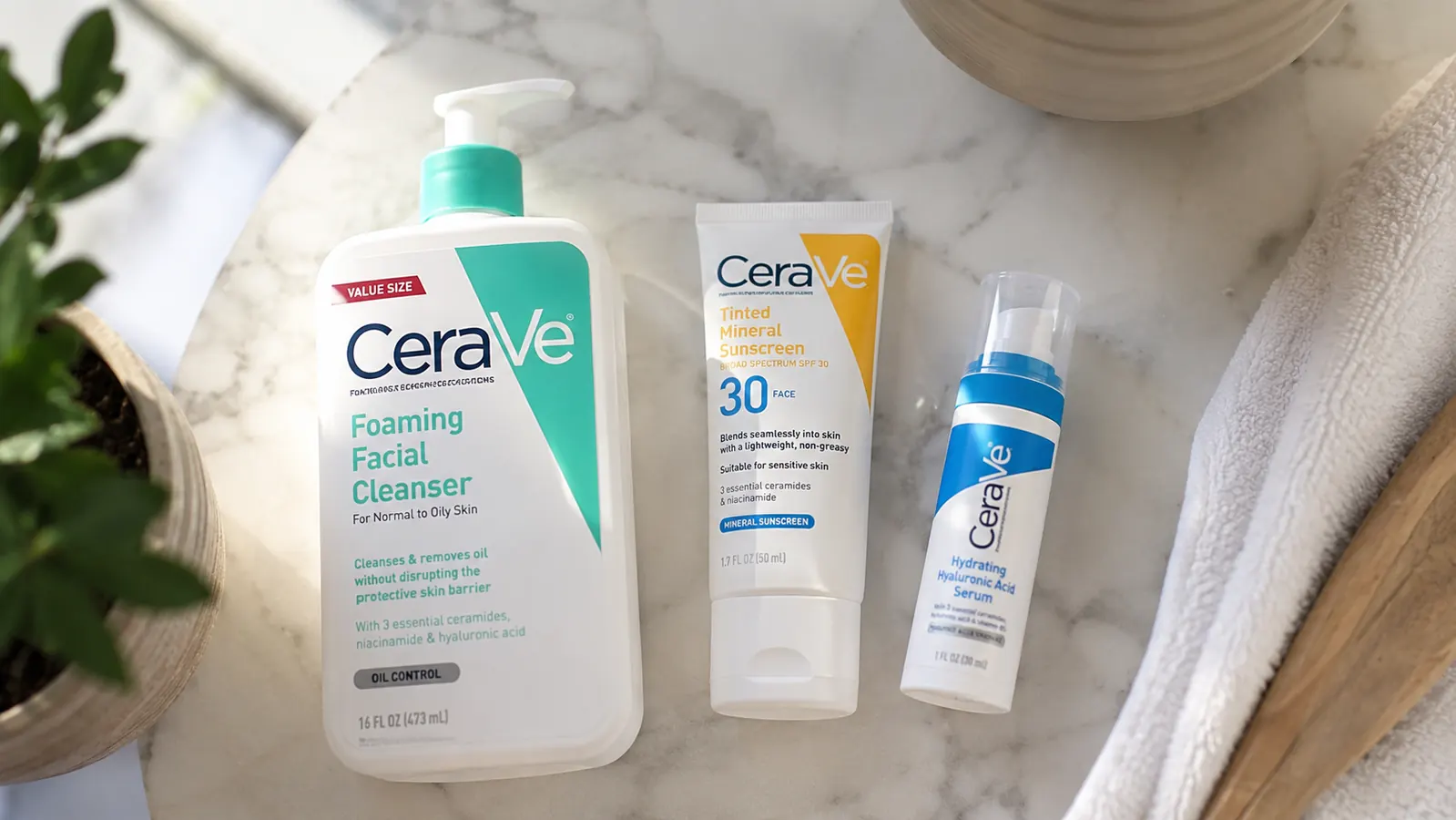
Before this tube, I alternated between a chemical SPF from a Korean beauty brand (lighter fluid texture, no cast, but the burning sensation was getting worse as my sensitivity increased) and the untinted CeraVe mineral SPF (no cast issue, but visibly chalky on my neck against my collar). The tinted version lands in a useful middle position. It does not have the fluid elegance of a chemical SPF, but it does not have the sensitivity problem either. The white cast improvement over the untinted formula is meaningful.
The comparison I get asked about most often is this product versus EltaMD UV Clear. If that comparison is useful to you, I have a full breakdown at the link below. The short version: EltaMD has a more refined finish and a longer wear window in heat, but it costs three times as much and requires a separate skincare routine around it. For daily home and office use, the CeraVe tinted SPF gives you most of the benefit at a fraction of the price.
For a deeper comparison of both options side by side, see my writeup on the CeraVe Tinted Sunscreen vs EltaMD UV Clear. And if the white cast problem with mineral formulas is something you are still working through, my guide on how to wear mineral sunscreen every day without looking ashy covers application technique in detail.
Who This Is For
This sunscreen is a strong fit for anyone with fair to light-medium skin who has been avoiding mineral SPF specifically because of white cast. If you have reactive skin, rosacea-prone skin, or sensitivity to chemical UV filters, this is a practical path to daily mineral protection without the cosmetic trade-off. It is also well suited to low-makeup or no-makeup routines where you want the SPF to do some of the heavy lifting on skin tone. The ceramide and hyaluronic acid content means you are getting some real skincare benefit on top of the UV protection, which makes the step feel less like a burden.
I would also call it a good fit for people who are building a consistent SPF habit for the first time. The price is low enough that using the correct amount (two pumps, every morning) does not feel like a sacrifice. That financial accessibility matters more than most sunscreen reviews acknowledge. An expensive SPF that you ration is doing less for your skin than a cheaper one you use correctly every day.
Who Should Skip It
If you have medium-deep to deep skin tones, this tint will not match and may leave an ashy or chalky cast that is arguably worse than an untinted mineral formula. I would direct those readers toward tinted mineral SPFs specifically formulated with deeper shade ranges, or toward untinted formulas worn under a tinted moisturizer that is already color-matched to your skin.
Skip it also if you are doing significant outdoor activity in heat. SPF 30 breaks down faster than SPF 50, and this formula is not water-resistant, so swimming, cycling, or long runs in summer sun call for something with more robust protection and water resistance. And if you need to reapply over a full face of makeup on a regular basis, this pump formula will frustrate you. A setting-powder SPF or a mineral mist reapplication method will serve you better for touch-ups.
If chemical SPF stings your skin, this is the formula that actually solves the problem
CeraVe Tinted Mineral Sunscreen SPF 30 is rated 4.4 stars across more than 71,000 Amazon reviews. It has held up through four months of daily use in my own routine. Check current availability and pricing below.
Amazon Check Today's Price on Amazon -> →