
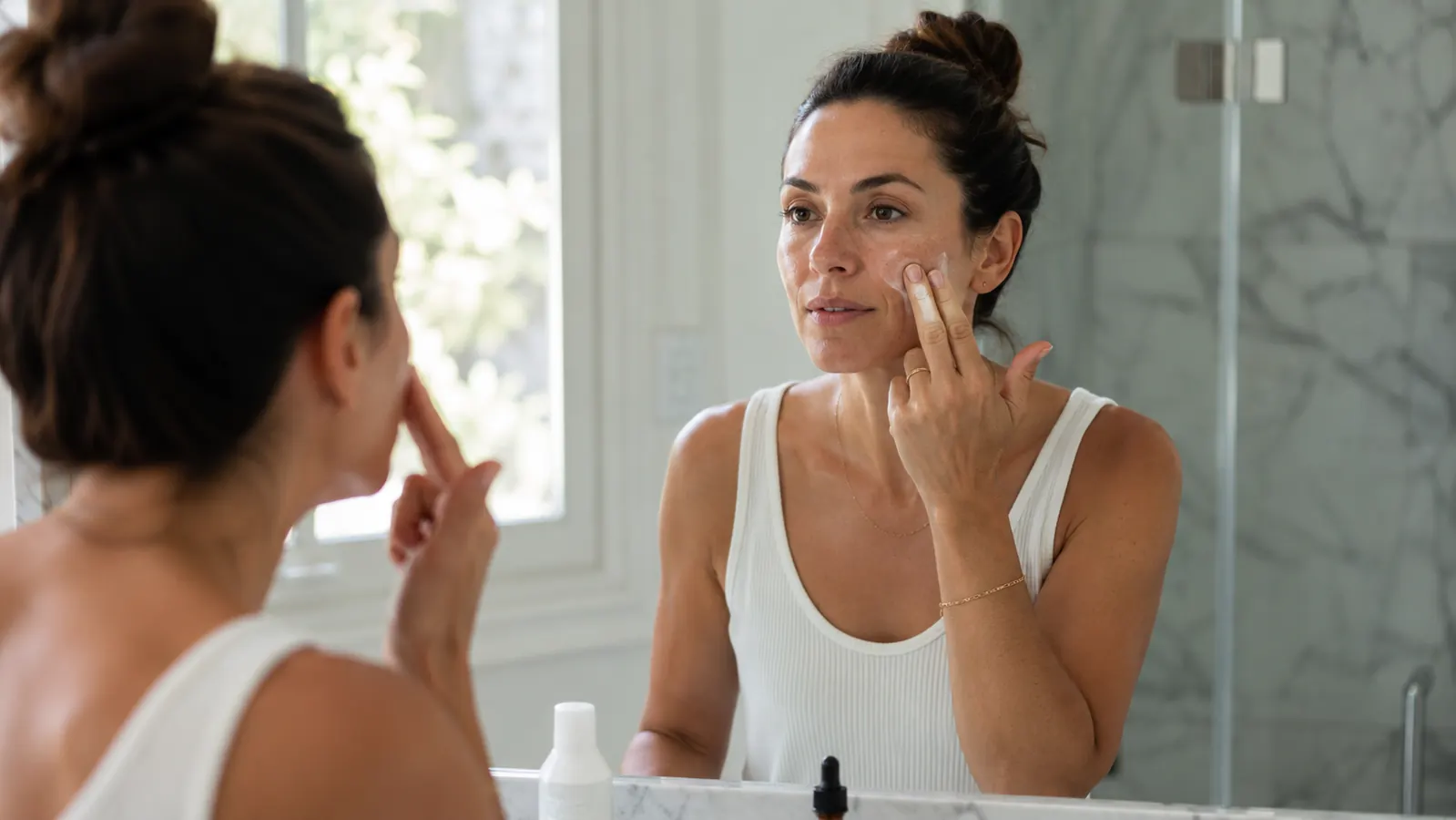
White cast is the single most common reason people tell me they stopped wearing mineral sunscreen. They tried it once, stepped outside, and looked like they had dusted their face with chalk. I get it. I spent years in retail skincare buying and I watched hundreds of customers reach for a chemical SPF not because they preferred the formula, but because the mineral options left them looking gray. The white cast problem is real, and it is worth solving, because mineral filters are significantly more tolerable for sensitive, reactive, and rosacea-prone skin than their chemical counterparts. Chemical filters like oxybenzone and avobenzone absorb UV energy by converting it to heat, which is exactly the process that triggers flushing and irritation on reactive skin types. Mineral filters sit on the surface and physically deflect UV rays without generating that heat response, making them the sensible default for anyone whose skin stings, flares, or breaks out in contact with standard sunscreens.
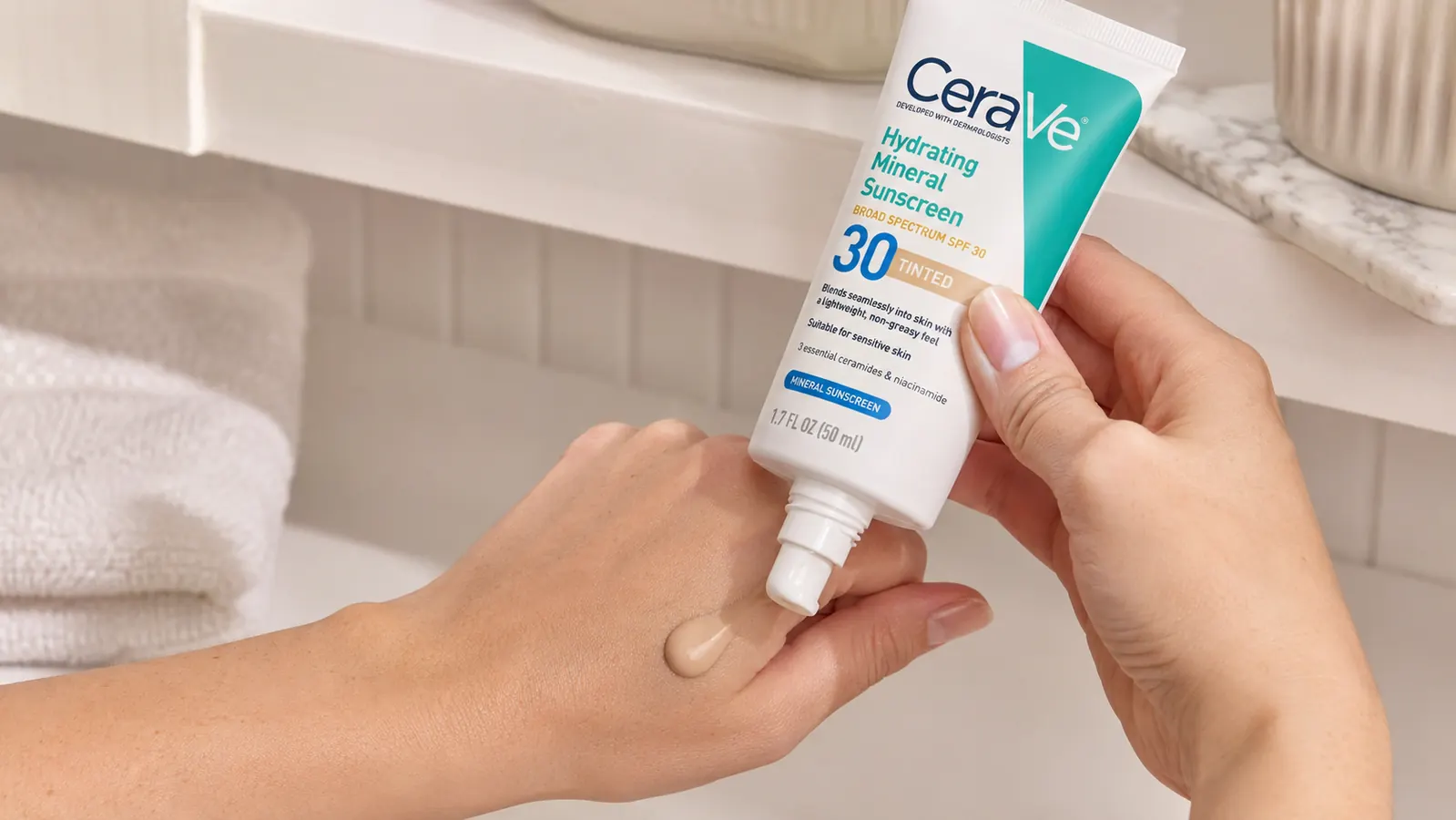
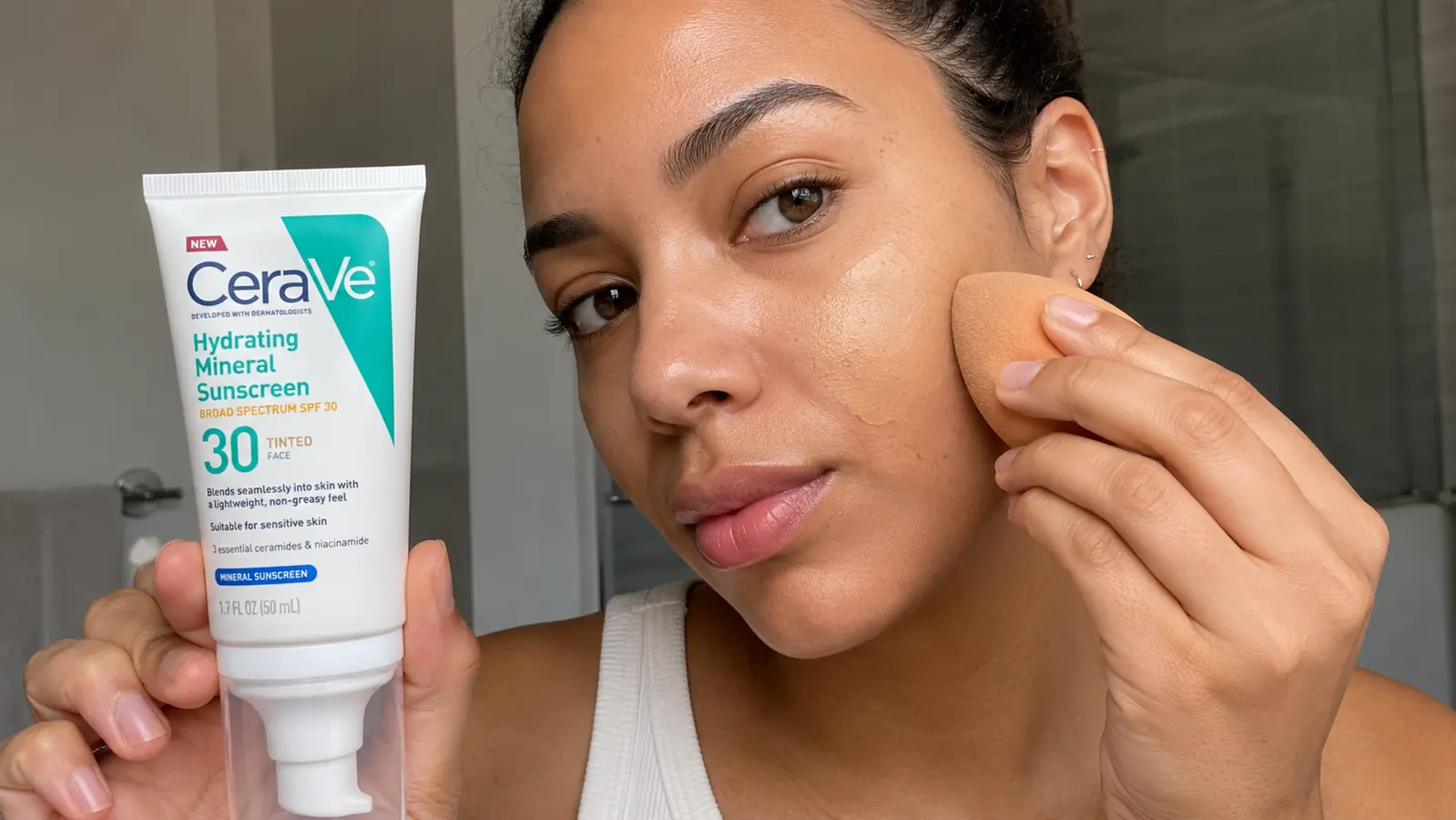
The good news is that the white cast problem is mostly a formula problem, not a mineral sunscreen problem. The CeraVe Hydrating Mineral Sunscreen SPF 30 Tinted is the formula that changed my mind on daily mineral wear. Its sheer iron oxide tint neutralizes the zinc cast before it hits your skin, and the result is a finish that reads as your face, not a mask. This guide walks through exactly how to pick the right formula, apply it correctly, and reapply it in the real world without undoing your makeup. Each step is based on what I have tested directly and what I consistently see make the difference between mineral SPF that people actually use every day versus a tube that sits forgotten in a drawer.
Skip the white cast and start with the formula that solves it
The CeraVe Tinted Mineral Sunscreen SPF 30 uses iron oxides to neutralize the zinc cast before it sets. It is the formula I recommend to anyone who has given up on mineral SPF.
Amazon Check Today's Price on Amazon →Step 1: Choose a Tinted Formula Instead of a Pure Zinc Sunscreen
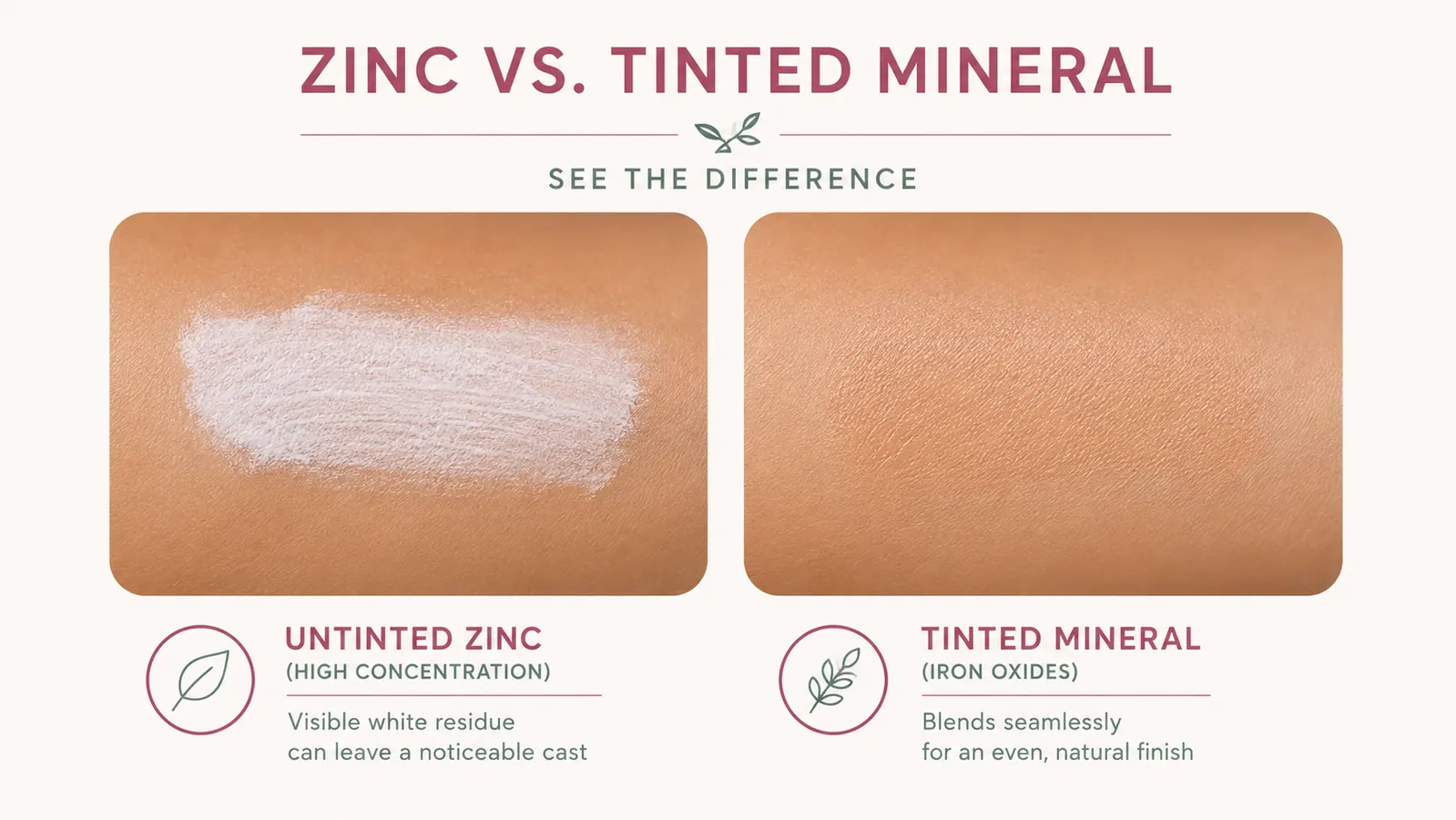
The white cast from mineral sunscreen comes from zinc oxide and titanium dioxide sitting on the surface of your skin and reflecting light. Both are physical blockers that work by sitting on top of the skin rather than absorbing into it. At concentrations high enough to provide SPF 30 coverage, most untinted formulas will cast white on every skin tone except the very lightest. Zinc oxide is particularly prone to this because it requires a relatively high concentration to meet SPF 30 thresholds, and that concentration reads visibly white against virtually any skin.
Tinted mineral sunscreens add iron oxides to the formula. Iron oxides are the same pigments used in makeup foundations and they serve two purposes here: they give the product a warm beige tone that blends with skin rather than sitting on top of it, and they provide added protection against visible light and blue light, which research suggests may contribute to hyperpigmentation. The tint does not provide medium coverage like a BB cream, but it neutralizes the cast completely on most light-to-medium skin tones. On deeper skin tones, a universal-tinted mineral SPF can still pull slightly lighter, so it is worth testing on your jawline before committing to a full face. The CeraVe tinted formula runs sheer enough that the effect is more color-correcting than tinted, which gives it a wider workable range than most single-shade formulas. If your skin is deep brown or deeper, look for a tinted SPF that lists multiple shades or one marketed for a range of deeper tones.
It is also worth noting that not all tinted mineral sunscreens are equal. Some use such a small amount of iron oxide that the tint does little to counteract the zinc cast. The CeraVe tinted formula has enough pigment to make a visible difference. You can test this on the back of your hand by applying a small amount and watching how it blends. A well-formulated tinted mineral SPF should disappear into the skin without any visible white residue within thirty seconds of blending.
Step 2: Apply to Damp Skin for a More Even Blend
Application technique matters more with mineral SPF than with almost any other step in a skincare routine. The most common mistake I see is applying sunscreen to completely dry skin. On dry skin, mineral SPF drags, piles up in fine lines and around the nose, and sets unevenly. That uneven set is often mistaken for white cast when it is actually just poor blending technique.
Apply your moisturizer first and wait about thirty seconds. Not until the moisturizer is fully absorbed, just until it stops feeling wet on the surface. The slight dampness on your skin acts as a slip layer that helps the sunscreen distribute evenly. Then dispense a nickel-sized amount of tinted mineral SPF onto your fingertips and dot it across your forehead, both cheeks, the bridge of your nose, and your chin. Press and pat the product in using your fingers rather than swiping or rubbing. Patting distributes the formula without disrupting the layers underneath or creating streaks.
If you find the formula is pilling despite this, there are two likely causes: either you are applying to too-dry skin or you are using a heavy silicone-based moisturizer underneath. Silicone and zinc do not always blend cleanly together, and the result is a balled-up texture that looks and feels like eraser shavings on your face. If pilling is a persistent issue, try switching to a water-based or ceramide-based moisturizer underneath your SPF. The CeraVe moisturizer line is specifically designed to work well under their SPF products, which is not a coincidence.
Step 3: Use the Right Amount, Not Less to Avoid Cast
A common workaround people try when mineral SPF leaves a cast is applying a very thin layer. The cast does get lighter, but so does the protection. Sunscreen SPF ratings are tested at a specific application weight of 2 milligrams per square centimeter of skin. Using half the recommended amount can reduce effective SPF by more than half in practice, turning your SPF 30 into something closer to SPF 10 or lower depending on how thinly you apply.
A nickel-sized amount spread across the full face is the widely used practical approximation for most adults. If that feels like too much product for your skin, the solution is a better-fitting formula, not a smaller amount of the current one. Tinted SPFs are inherently easier to apply at full coverage because the pigment lets you see where the product has been distributed. Blank spots in your application are visible as areas where the tint has not reached, which makes it harder to under-apply accidentally. With the CeraVe tinted formula specifically, a full nickel-sized amount blends completely on most skin tones without any visible white residue once patted in.
Step 4: Set with a Translucent Powder to Reduce Shine and Extend Wear
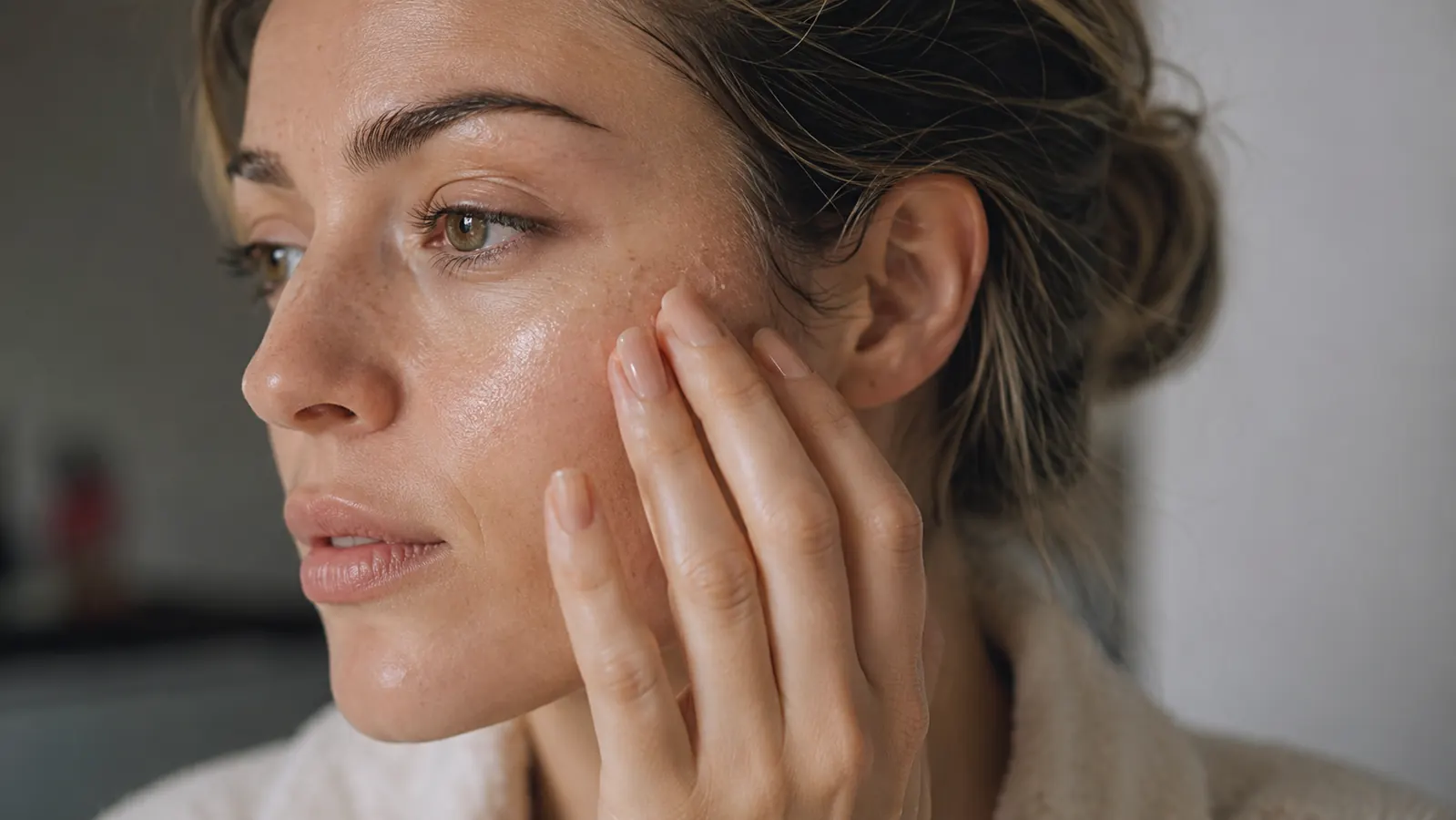
Most mineral sunscreens have a slightly dewy finish because the emollients needed to blend zinc oxide smoothly tend to be on the richer side. The CeraVe tinted formula is on the more hydrating end of the spectrum, which is good for dry and combination skin but can feel too shiny for oily skin types by mid-morning. If you are oily, a single finishing step can make the difference between a sunscreen you wear every day and one you skip.
A light dusting of translucent setting powder pressed over the top does two things. It sets the SPF layer so it is less prone to transfer, and it cuts the shine without adding visible coverage or altering the tint. Pressed powder works better than loose powder here because you can control the amount precisely and it does not disturb the even layer of product underneath. A single pass with a powder puff or a clean damp sponge gives a finished look that holds through most of a workday without disturbing your SPF coverage.
If you are going makeup-free or using the sunscreen as your only coverage step, the dew from the CeraVe formula reads as healthy rather than greasy on most skin tones. On combination skin I personally find it sits well through about four hours before I start looking shiny in the T-zone. Whether or not to set it is a personal call based on your skin type, your climate, and how long you need the finish to hold.
Step 5: Reapply Every Two Hours Without Stripping Your Makeup
Reapplication is the step almost everyone skips, and it is also the step that separates people who get real UV protection from people who have the idea of UV protection. SPF degrades with UV exposure, sweat, and physical contact over time, so a single morning application does not protect you through an afternoon outdoors or a day near windows. The standard recommendation is reapplication every two hours of significant UV exposure, which in most indoor-based lives means a midday reapplication if you spend any time outside around lunch or near south-facing windows in the afternoon.
The cleanest reapplication method over makeup is a tinted mineral SPF powder, which you can buff directly over foundation without disturbing it. These exist as pressed compacts and loose powders with zinc oxide built in, and while they are less elegant in formulation than a cream SPF, they are a reasonable practical solution for midday touch-ups. If you are wearing the CeraVe tinted formula with no other coverage on top, you can reapply directly by pressing a small amount over your existing base with a damp beauty sponge. The key is pressing motion, not swiping. A swiping motion lifts your existing base and creates streaks. Pressing fuses the new layer on top of the old one without disturbing it.
On days when you are mostly indoors with limited direct sun exposure, a midday touch-up during a lunch walk is enough for most people. On beach days, outdoor events, or any extended period in direct sun, reapplication with a generous amount every two hours is the standard guidance. A tinted SPF makes this significantly easier to stick to because it does not add visible product buildup the way an untinted formula would. By the second or third application, an untinted mineral SPF starts to look chalky and heavy. The tinted formula keeps blending cleanly because the iron oxides absorb into the existing tint layer rather than stacking on top of it.
What Else Helps
A few supporting habits make the whole system work better. Keeping your skin well-hydrated through a hyaluronic acid serum under your moisturizer gives mineral SPF a smoother surface to sit on, which reduces pilling and uneven finish. Avoiding heavy oil-based moisturizers directly under mineral SPF also helps, as oils can break down the emulsion and contribute to midday melt. If you are in a humid climate, a mineral SPF in a gel or lightweight fluid base will hold longer than a cream base. If you are still seeing cast after switching to a tinted formula, try applying with a damp sponge instead of fingers. The diffused even pressure from a sponge distributes the product in a way that fingertip application sometimes cannot manage around the nose and jawline, where cast tends to accumulate. Store your SPF at room temperature rather than in a hot car or sunny windowsill, because heat degrades both the UV filters and the tint pigments faster than normal.
The white cast problem is a formula problem, not a mineral sunscreen problem. Once you switch to a tinted formula and apply to slightly damp skin with a patting motion, the finish looks like your face, not a zinc mask.
The formula that finally made daily mineral SPF feel like a habit
The CeraVe Hydrating Mineral Sunscreen SPF 30 Tinted is the sunscreen I reach for every single morning. Iron oxides, hyaluronic acid, niacinamide, and ceramides in one step. No white cast, no pilling, no convincing yourself to skip it.
Amazon Check Today's Price on Amazon →