
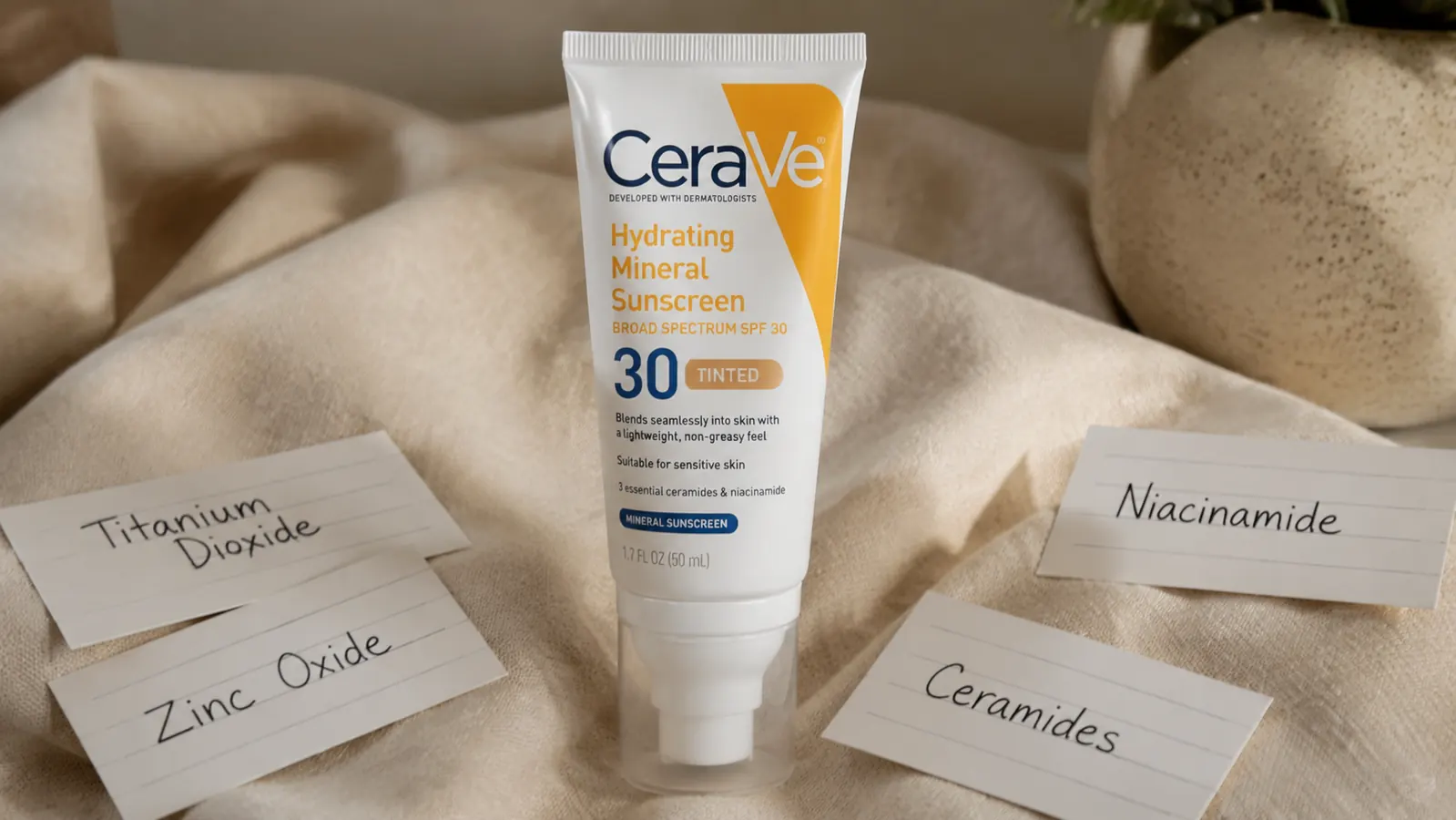
Let me tell you what the marketing for the CeraVe Hydrating Tinted Mineral Sunscreen SPF 30 does not tell you. It does not tell you that the tint is a single shade engineered around a narrow slice of fair-to-light-medium complexions. It does not tell you that zinc oxide at the concentration used here delivers real protection but has a ceiling at SPF 30 that matters if you are spending extended time outdoors. And it definitely does not explain what happens when you try to reapply this sunscreen at noon over the concealer and blush you put on that morning. These are not dealbreakers for everyone. But they are exactly the things I wish someone had laid out clearly before I spent time figuring them out myself.
I have been reviewing skincare products for a long time and I approach every formula the same way: I read the full ingredient list before I open the tube. Then I test the product on my own skin over several weeks. Then I think carefully about who this is actually designed for, because no product works equally well across every skin tone, type, and lifestyle. The CeraVe tinted SPF has nearly 72,000 Amazon reviews and a 4.4-star average, which tells you it works well for a lot of people. My job here is to explain exactly which people, and why.
The Quick Verdict
A well-formulated drugstore tinted mineral SPF with ceramide support and meaningful iron oxide protection, but the single universal tint and SPF 30 ceiling make it a precise fit rather than a universal one.
Amazon Check Today's Price →If you are fair to light-medium and want a mineral SPF that does not fight your skin, this is worth checking
The CeraVe Tinted Mineral Sunscreen is among the more thoughtfully formulated options at this price point. See the current price on Amazon before you decide.
Amazon Check Today's Price on Amazon -> →How I've Used It
I tested this sunscreen in two distinct phases over roughly ten weeks. During the first five weeks I used it on bare skin only, applying it as the last step of my routine each morning, no foundation or tinted moisturizer on top. I wanted to understand how the formula actually behaved: the rub-in time, the finish, the way it sat on my pores, how it felt at the end of a full day. I applied two pumps, patted it across my face rather than rubbing aggressively, and waited the full 15-minute pre-exposure window before going outside.
During the second five weeks I incorporated it under my regular makeup routine and also tested reapplication mid-day. I asked two friends with medium and medium-deep skin tones to each try the product for one week and report back honestly. Their observations are included in the skin tone section below. This two-phase approach gave me a much more complete picture of the product than I would have gotten from bare-skin use alone.
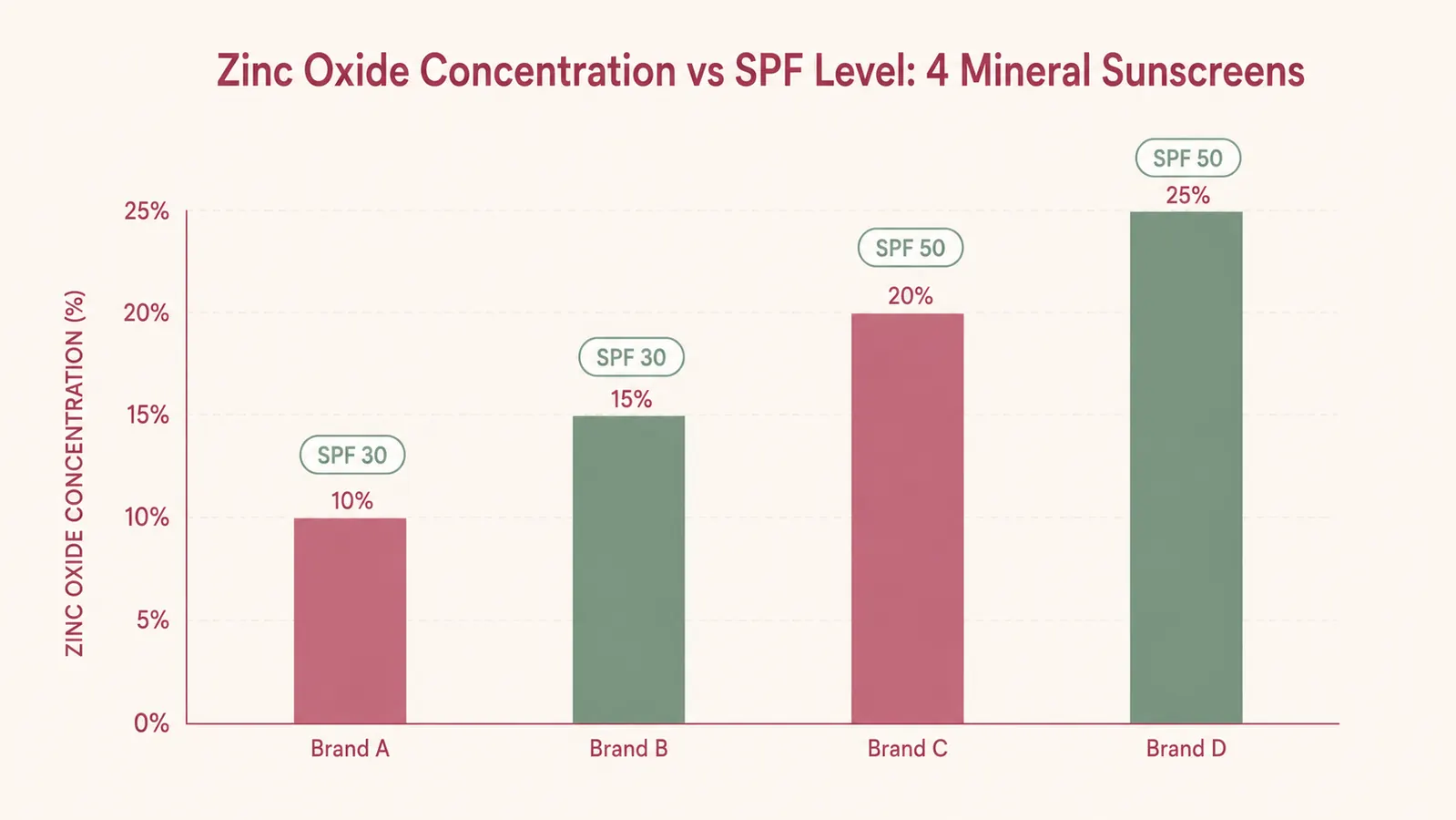
I also contacted CeraVe to confirm the zinc oxide percentage, since the label lists it as an active ingredient but does not specify the concentration beyond what is required by FDA. The published formulation puts zinc oxide at 10%, which is on the lower end for a purely zinc-based mineral SPF. That number matters, and I will explain why in the protection section.
What the Ingredient List Actually Tells You
The active ingredient is zinc oxide at 10%. That is the physical filter doing all of the UV blocking. Zinc oxide is a broad-spectrum physical blocker, meaning it scatters and reflects both UVA and UVB rays rather than converting them to heat the way chemical filters do. This is why mineral sunscreens tend to be gentler on reactive or sensitized skin. At 10%, you get SPF 30, which the FDA defines as blocking roughly 97% of UVB rays. That is a meaningful level of protection for everyday use. It is not the SPF 50 that many dermatologists recommend for prolonged outdoor exposure, which blocks about 98%. The one-percent difference sounds trivial but translates to a real gap in UVB filtration over a full day in the sun.
On the inactive side, the formula includes three ceramides (1, 3, and 6-II), which are skin-barrier lipids that help maintain the outer layer of skin. CeraVe is built around this ceramide blend and it appears in this sunscreen at a functional level, not just as a label claim. Niacinamide is present as well, which supports barrier function and may help with redness. Hyaluronic acid rounds out the hydrating actives. These are not marketing additions. A sunscreen that genuinely repairs the barrier while protecting it is worth something, especially if you have compromised or reactive skin.
The tint in the formula comes from iron oxides, specifically a blend of red, yellow, and black iron oxide pigments that together produce a warm beige tone. Iron oxides are important here for two reasons. First, they provide protection against visible light and high-energy visible light (HEV), which zinc oxide alone does not block. This is a real formulation advantage over untinted mineral SPFs. Second, the iron oxide shade was calibrated for a specific tonal range. The formula ships as one universal product, not in multiple shades.
Iron oxides protect against visible light that zinc oxide alone cannot block. But they also commit you to a single tint, and that tint was not designed with deeper skin tones in mind.
The Tint: What It Does Well and Where It Stops Working
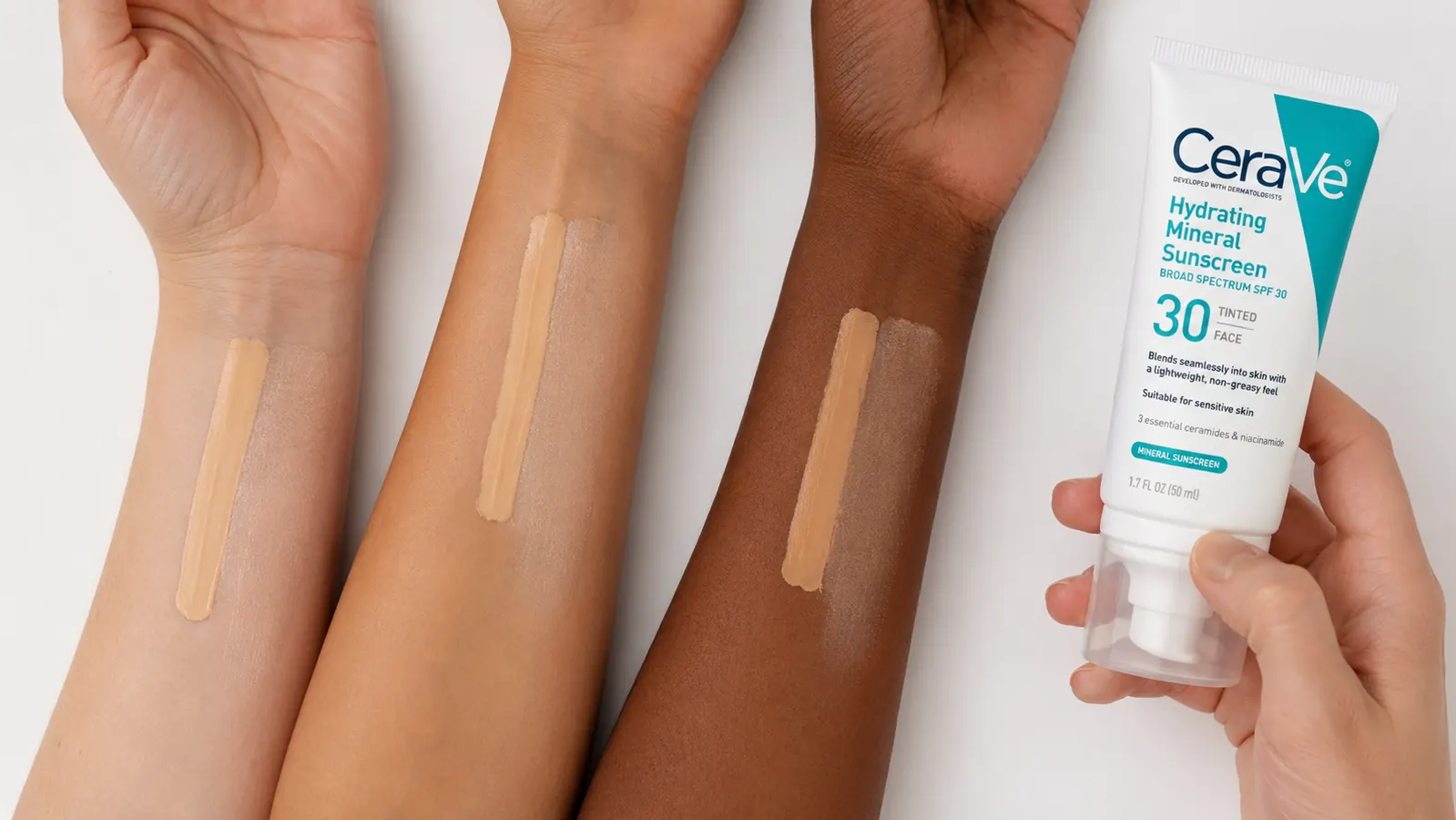
On my own skin, which sits at a fair-to-light-medium tone with warm undertones, the tint blends to something close to a no-makeup look. I could not call it invisible. But it reads as skin rather than product, which is all I needed. The texture is thin enough that two pumps spread without streaking, and patting it in (rather than rubbing) got it to a smooth, slightly satin finish within about 40 seconds. The rub-in window is real. If you rush the application you will see a faint cast from the zinc oxide under the iron oxide pigments. If you take the extra 30 to 40 seconds to properly pat and blend, that goes away.
My friend with medium skin found the tint workable but noticeably warm on her complexion. It did not look ashy, which she said was a common complaint with other mineral SPFs she had tried. But it did add a warmth she had to compensate for with a slightly cooler-toned blush. She rated her experience as passable, not great. My friend with medium-deep skin found the tint noticeably light for her complexion. She said it read as a light beige tint on her skin rather than a neutral, and she would not use it without foundation on top. For her, it functioned essentially as an untinted SPF with the bonus of visible-light protection from the iron oxides, but the cosmetic tint benefit was not there.
This is not a flaw specific to CeraVe. It is a category-wide issue with single-shade tinted mineral sunscreens. The honest framing is: if you are fair to light-medium with neutral or warm undertones, this product delivers the tint benefit it promises. If you are medium-deep or deeper, you are buying it for the zinc and iron oxide protection, not the cosmetic tint, and you should price-compare accordingly.
SPF 30 Versus SPF 50: When the Difference Actually Matters
SPF 30 is sufficient for a lot of everyday scenarios: commuting, working near windows, errands, walking the dog. If your primary UV exposure is incidental, meaning you are not sitting outside for extended periods, SPF 30 is a reasonable daily choice and better than nothing by a wide margin. The CeraVe tinted SPF fits that use case well.
Where SPF 30 starts to underperform is in extended outdoor exposure. A beach day, a full afternoon outdoors, any activity where you will be in direct sun for more than an hour or two calls for SPF 50, and more critically, it calls for reapplication every two hours. The SPF rating of a sunscreen is measured under lab conditions on freshly applied product. After two hours, sweat, touch, and environmental breakdown have reduced your protection substantially regardless of the original SPF. The CeraVe tinted SPF is not designed or marketed as a sport or outdoor sunscreen. It is a daily wear formula. Use it accordingly.
If you are someone who spends meaningful time in direct sun and wants a single product for both daily wear and outdoor activity, this is probably not your ceiling. A formulation with 15% to 20% zinc oxide will get you to SPF 50. The tradeoff is typically a heavier texture and more pronounced white cast. That is the physics of mineral SPF. The CeraVe tinted SPF made the trade in the other direction: lighter texture, better tint, lower active concentration, SPF 30.

Reapplication Over Makeup: The Part Nobody Talks About
If you wear makeup and you want to reapply sunscreen during the day, you have three real options: a powder SPF over foundation, a setting spray with SPF, or acceptance that you are not truly reapplying. The CeraVe tinted SPF is not designed for over-makeup reapplication. Its thin lotion texture will disturb foundation and concealer. I tested this directly. After applying the tinted SPF in the morning, waiting for it to set, then applying light foundation and concealer, I tried reapplying the sunscreen at noon. The result was a broken, slightly tacky finish that required basically starting my face over.
This is not unique to this product. Almost no lotion sunscreen works cleanly over a full makeup application. The honest answer is that the CeraVe tinted SPF is most useful either as a stand-alone tinted product (no makeup over it, or light powder only) or as an SPF-moisturizer hybrid under full makeup where you are prioritizing morning protection and accepting that the full SPF level is not being maintained through the day. Both are valid uses. Just do not expect to touch it up over concealer at your desk without disrupting your whole look.
What I Liked
- Iron oxides provide visible-light protection that untinted zinc formulas skip
- Three ceramides and niacinamide support the barrier while protecting it
- Thin, patting-friendly texture absorbs in under a minute with no stickiness
- Works well as a no-makeup tinted SPF for fair to light-medium skin tones
- Non-comedogenic formula suits acne-prone and reactive skin
- Very competitive price for a formula with real functional actives
Where It Falls Short
- Single universal tint reads warm and light on medium-deep and deeper complexions
- SPF 30 ceiling is lower than what many dermatologists recommend for extended sun exposure
- Rub-in time of 30 to 40 seconds is real; rushing the application leaves a faint cast
- Not suitable for over-makeup reapplication during the day
- Pump dispenses more product than necessary for lighter coverage needs
How the Ceramide Packaging Affects Daily Skin Health
One thing that often gets lost in sunscreen discussions is the cumulative effect of what you are applying to your skin every single day. A sunscreen that strips moisture or disrupts the barrier is a net negative over time even if the UV protection is excellent. This is where the CeraVe formula earns its keep beyond the active ingredient. The ceramide 1, 3, and 6-II complex, combined with hyaluronic acid and niacinamide, means you are applying barrier-supportive ingredients every time you use your SPF. Over weeks of consistent use, I noticed my skin felt less reactive in the morning. That is likely a compounding effect from the ceramides, not a single-application outcome.
The formula is also fragrance-free and non-comedogenic, which removes two of the most common reasons people discontinue daily sunscreen use. Fragrance in skincare is the leading trigger for contact dermatitis. Non-comedogenic formulation matters for anyone who has ever broken out from a heavy SPF cream. Neither of these attributes is glamorous, but they are the difference between a sunscreen you actually wear every day and one that sits on your shelf.
Who This Is For
The CeraVe Hydrating Tinted Mineral Sunscreen SPF 30 is a strong fit for people with fair to light-medium skin tones who want a mineral SPF that does not leave a noticeable cast and works as a no-makeup or light-coverage daily step. It is particularly well-suited to anyone with sensitive, reactive, or barrier-compromised skin who needs a sunscreen that repairs while it protects. It also works well as an SPF base layer under light makeup, particularly powder or tinted SPF powder for midday touch-ups. If your primary sun exposure is incidental, meaning commuting, window light, and short outdoor windows, SPF 30 is an appropriate protection level for your needs.
Who Should Skip It
Skip this sunscreen if you have medium-deep or deeper skin and want the cosmetic tint benefit to actually read as skin-like. You will get the iron oxide and zinc oxide protection, but the formula will look like a light beige tint on your complexion rather than a match. Skip it if you need SPF 50 for outdoor activities like hiking, beach days, or water sports. Skip it if you want to reapply over full makeup midday, since this formula is not built for over-foundation application. And skip it if you prefer a truly matte finish. The satin finish this leaves is minimal, but it is present, and on oilier skin types it may look slightly luminous by midday.
Fair to light-medium skin, barrier-sensitive, and tired of white-cast mineral SPFs?
This formula specifically addresses the two reasons people give up on mineral sunscreen: the cast and the skin-stripping dryness. If that is your situation, the current price on Amazon makes it worth a trial tube.
Amazon Check Today's Price on Amazon -> →