
Let me start with something that does not appear on the CeraVe Hyaluronic Acid Serum label and rarely shows up in the star-rating reviews: if you live somewhere with low ambient humidity and you apply this serum to a dry face without sealing it immediately, there is a real chance you will feel tighter, not more comfortable, within the hour. That is not a defect in the formula. It is a property of hyaluronic acid that every review of this product should mention and almost none do. I am going to explain why that happens, what the three-molecular-weight formula is actually doing, and whether the ceramide and Vitamin B5 additions are meaningful or just marketing texture. Then I will be honest about what this serum cannot do, because it is frequently sold as something broader than it is.
The CeraVe Hyaluronic Acid Serum with Vitamin B5 carries a 4.6-star rating from over 30,000 Amazon reviews. That is a strong signal, but a high star average can mask a cluster of specific complaints that only appear when you sort by one and two stars. I spent time there. The pattern is consistent: reviewers in dry climates or low-humidity apartments who applied the serum to dry skin and found it made things worse. That experience is predictable if you understand how HA works. It is fixable with a single technique adjustment. But if you do not know to look for it, it is genuinely confusing.
The Quick Verdict
A well-constructed, dermatologist-developed hydration serum with a meaningful formula design. Delivers on its promise when applied correctly. Falls short only for people expecting treatment-level results or those who skip the damp-skin step.
Amazon Check Today's Price →If your skin feels tight despite a solid moisturizer, the missing step is almost always a hydrating serum applied before the moisturizer, on damp skin.
The CeraVe HA Serum is one of the most carefully formulated options at this price. Check the current price on Amazon and see if it fits your routine.
Amazon Check Today's Price on Amazon →How I've Used It
I first tried this serum during a particularly dry stretch of late autumn, when the heating in my apartment was running constantly and the air inside was about as hydrating as a paper bag. My skin at baseline is combination, with a tendency toward dehydration through the cheeks in cold months. I had been using a ceramide-heavy moisturizer and still waking up to skin that felt tight and slightly papery before I even washed my face. That persistent morning tightness is the telltale sign of transepidermal water loss during the night: your skin is losing moisture to the dry room air even while you sleep.
I added the serum to my morning and evening routines for ten weeks. In the morning: gentle foam cleanser, rinse, pat my face until damp but not dripping, press two drops of serum across my cheeks and forehead using my palms (never rubbing, always pressing), wait about twenty seconds, then apply my moisturizer while the serum was still slightly tacky. Evening: same sequence, followed by a richer night cream. What I noticed most was the improvement on waking. The heated apartment was still stripping moisture from my skin overnight, but using the serum under an occlusive night cream gave the HA a water reservoir to work with. My skin felt measurably less papery within about ten days of consistent evening use.
The Multi-Molecular-Weight Formula: What It Actually Means
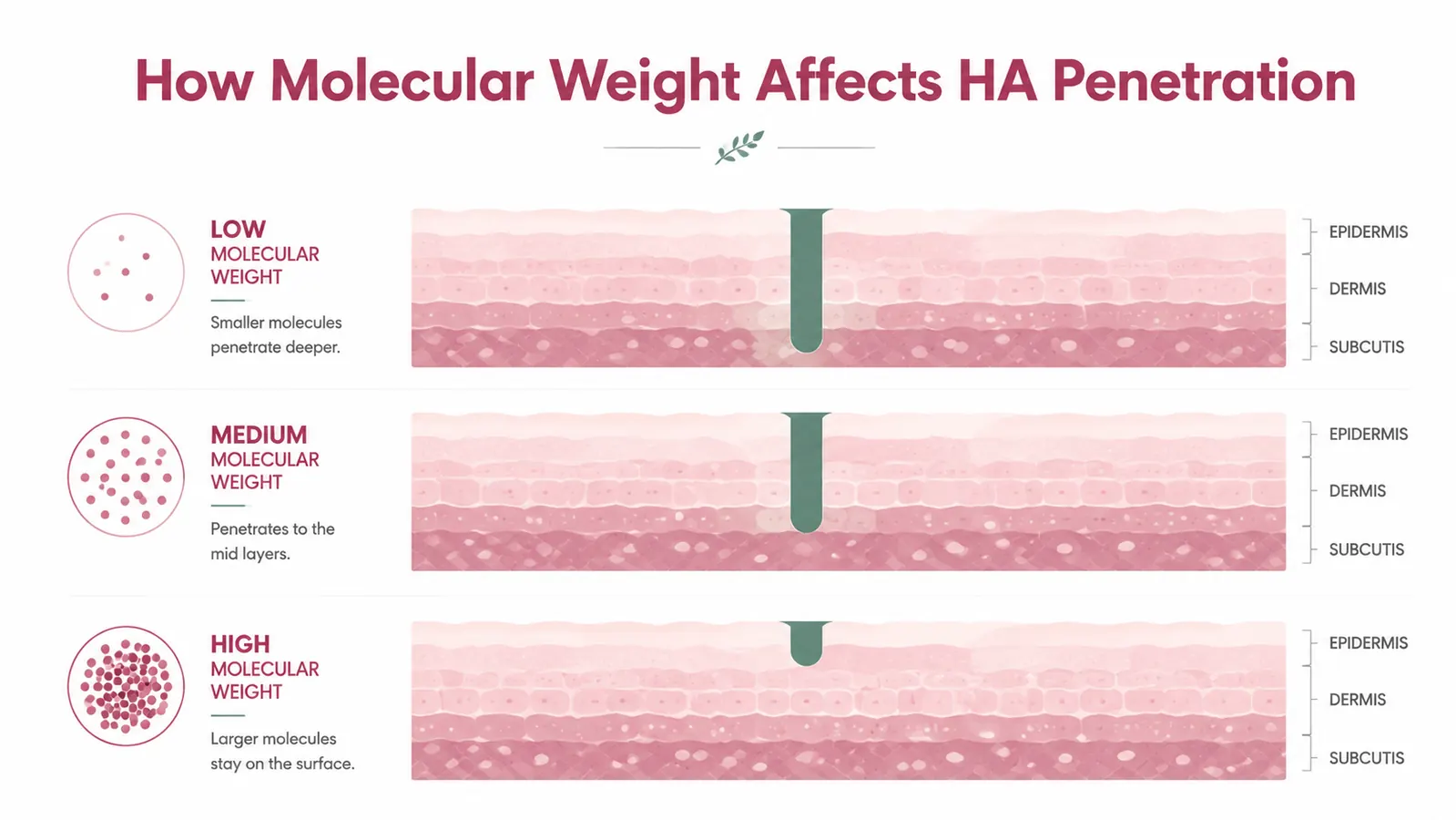
Hyaluronic acid is a glycosaminoglycan, a long-chain sugar molecule that the skin produces naturally and that has a remarkable capacity to hold water relative to its own weight. The catch is that its behavior depends heavily on the size of the molecule. This is where the three-molecular-weight design in the CeraVe serum becomes worth understanding rather than just accepting as a marketing phrase.
High-molecular-weight hyaluronic acid, sometimes called high-MW HA, forms a film on top of the skin. It does not penetrate. What it does is create a water-retaining layer right at the surface, reducing immediate water evaporation and giving skin that plump, cushioned feeling you notice minutes after applying. This is why HA serums feel so effective immediately but can seem to wear off over a day if not sealed properly.
Medium-molecular-weight HA penetrates slightly further, into the upper layers of the stratum corneum. It hydrates the outer skin cells, which are technically dead but still influence how your skin looks and feels. This is the tier that contributes to smoother surface texture over consistent use. Not resurfacing in any exfoliant sense. Simply better-hydrated surface cells that reflect light more evenly.
Low-molecular-weight HA, sometimes called oligomeric HA, penetrates most deeply of the three. Research here is more nuanced: very small HA fragments have been associated with mild pro-inflammatory signals at high concentrations in some in vitro studies, but at the low concentrations used in cosmetic serums the predominant effect appears to be improved deeper epidermal hydration without irritation. CeraVe does not disclose the exact molecular weights or concentrations used, but the inclusion of all three tiers is consistent with current best-practice formulation for HA serums.
The practical upshot: a single-molecular-weight HA serum hydrates at one depth. A multi-weight formula hydrates across a gradient. You are less likely to get excellent surface plumpness combined with dry deeper skin, or good deeper hydration with no surface effect. The formula in the CeraVe serum is designed to cover the full stack.
Vitamin B5 and Ceramides: Supporting Roles That Matter
Panthenol, the form of Vitamin B5 used in this serum, is a provitamin that converts to pantothenic acid in the skin. Its job here is twofold. First, it is a humectant: it attracts and retains water independently of the HA, adding to the total moisture-binding capacity of the formula. Second, it has a well-documented mild wound-healing and barrier-supporting effect at higher concentrations. At the levels used in serums it probably contributes more to the first function than the second, but the combination with HA means you are getting two humectant mechanisms working at once rather than one.
The ceramides are a smaller addition relative to CeraVe's moisturizers, where ceramides are the primary active components. In this serum they are present to prevent the hydration step from inadvertently stressing the barrier. When skin is very dry and slightly compromised, introducing a water-attracting formula without any barrier support can sometimes cause mild irritation. The ceramide inclusion buffers that. It is not delivering the same ceramide dose as a CeraVe moisturizing cream, and it should not be your main barrier repair tool. But it is there to make the formula gentler on already-stressed skin, which is a meaningful design choice.
There is also a small amount of niacinamide in the formula. At this concentration it is not functioning as a primary pore-minimizing or sebum-regulating agent. It is supporting barrier integrity and contributing a mild anti-inflammatory effect. If you want to use a dedicated niacinamide serum alongside this one, you can layer them without conflict: HA serum on damp skin first, niacinamide serum second, then moisturizer.
A single-molecular-weight HA serum hydrates at one depth. A multi-weight formula hydrates across a gradient. That is the actual difference, and it matters.
The Dry-Climate Problem Nobody Explains Properly
Hyaluronic acid is a humectant. Its function is to pull water from its environment and hold it. In a humid environment, or with freshly cleansed damp skin, it has plenty of water to draw from. In a dry environment with dry skin, it still pulls water from whatever is available. The closest available source is the deeper layers of your own skin.
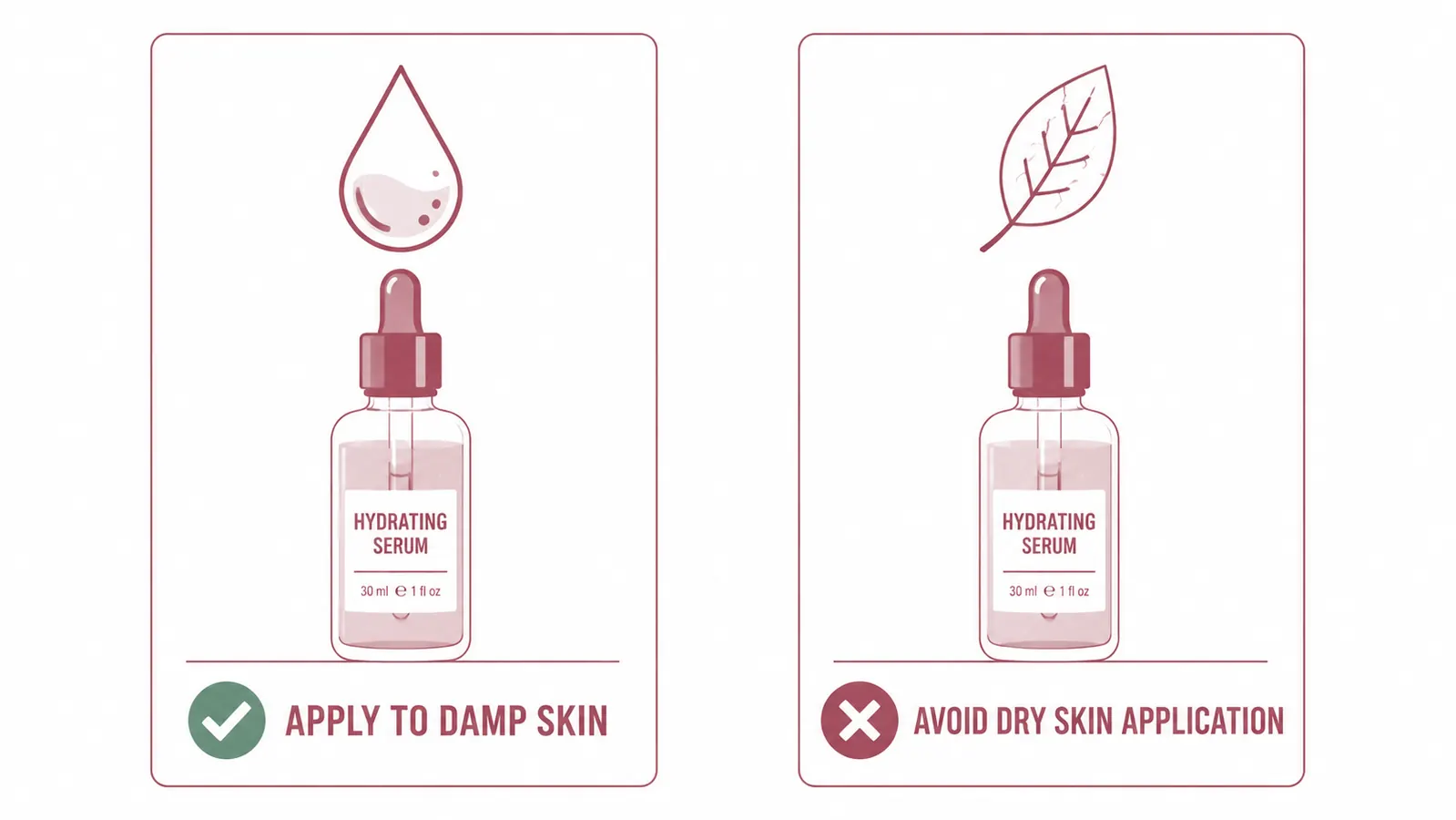
This is the mechanism behind the dry-climate complaint. When someone in a low-humidity apartment applies a HA serum to a completely dry face, does not seal it with a moisturizer within a minute or two, and then goes about their morning, the HA draws moisture upward from the dermis to the surface, but that surface moisture then evaporates into the surrounding dry air before the moisturizer can seal it in. Net result: skin that feels tighter than before application. This is not a product flaw. It is a physics outcome.
The fix is specific. Apply the serum to skin that is still slightly damp from cleansing. Press it in. Follow immediately with your moisturizer. Do not let more than about sixty seconds pass between the two steps. If your routine makes that difficult, you can apply the serum to the back of your hand, leave a small amount of water on your face from rinsing, then press both onto your face at the same time. The goal is that the HA has ambient moisture to draw from while you seal it in. I tested this deliberately: three mornings applied to a towel-dry face with no moisturizer for five minutes felt noticeably tighter at the thirty-minute mark. Three mornings applied to damp skin with immediate moisturizer felt consistently more comfortable. Same product, one variable.
Dispensing and Storage Notes
The serum comes in a glass dropper bottle. The dropper works reliably when the bottle is more than one-quarter full. As you approach the bottom, you have to squeeze the cap more firmly to draw up liquid, and dispensing can become inconsistent. Near the end of my first bottle the dropper dispensed significantly more than two drops at once on a few occasions, which wasted product. Once the bottle is about one-quarter full, tilt it slightly when drawing the dropper and pull more slowly. You will get better control and lose less. On storage: keep it away from direct sunlight and steam. The amber glass offers some protection from light degradation, but a medicine cabinet or bathroom drawer is more reliable than an open shelf beside a hot shower.
What This Serum Is and What It Is Not
I have seen this serum recommended alongside language about fine lines and texture improvement that goes beyond what a hydration-only product can deliver. Let me be direct: the CeraVe HA Serum is a humectant serum. It attracts and holds water. Well-hydrated skin looks and feels better than dehydrated skin. That is real and noticeable. But it is not treating anything.
Dehydration lines, those fine horizontal creases on the forehead or under the eyes that worsen when your skin is dry, will improve with consistent HA use because they are caused by water deficit, not collagen loss. True fine lines from sun damage or muscle movement are not affected by a humectant. For those you need a retinoid or peptide-based product. Similarly, discoloration, blemishes, pores, and texture concerns from past breakouts require targeted actives: vitamin C for pigmentation, higher-concentration niacinamide for pores, a BHA for congestion. The HA serum can support those products by keeping the barrier comfortable, but it does not replace them.
For a full side-by-side look at how this serum compares to a comparable alternative, I covered both in detail in the CeraVe HA Serum vs The Ordinary Hyaluronic Acid comparison. And for a longer account of what daily use actually produces over time, the CeraVe Hyaluronic Acid Serum long-term review goes into the day-to-day experience in depth.
What I Liked
- Three-molecular-weight HA formula addresses surface, mid-layer, and deeper epidermal hydration simultaneously
- Vitamin B5 adds a second humectant mechanism alongside HA for greater total water retention
- Ceramide inclusion buffers potential barrier irritation on compromised or very dry skin
- Fragrance-free, non-comedogenic, and gentle enough to layer with actives including retinoids
- Lightweight texture absorbs quickly and layers cleanly under any moisturizer
- Dermatologist-developed formula from a brand with a long track record in skin barrier research
Where It Falls Short
- Reverse moisture pull is a real risk in dry climates if the damp-skin application step is skipped
- Dropper dispenses inconsistently in the final quarter of the bottle
- Does not address any active skin concerns such as discoloration, texture, or blemishes
- Small 1 fl oz bottle runs out quickly with twice-daily use
- CeraVe does not disclose exact molecular weights or concentrations, limiting formula transparency
Who This Is For
This serum suits anyone whose primary complaint is skin that feels dry, tight, or uncomfortable despite regular moisturizer use. A humectant serum fills the gap between what a barrier cream alone can do and what your skin actually needs in a dry environment. It is also a practical choice for people with sensitive or reactive skin who want a hydration boost without fragrance, essential oils, or high-concentration actives. The formula is gentle enough for use during barrier-disruption periods, including retinol introduction, post-peel recovery, or harsh winter months when skin becomes more fragile. If your skin skews dry only in certain zones, you can press the serum into those areas specifically without applying it everywhere.
Who Should Skip It
If you live somewhere humid and your skin is already comfortable throughout the day, this serum is unlikely to produce a meaningful change. Not every skin type needs a dedicated humectant layer. If your routine feels fine from cleansing through midday, do not add steps without a reason. Save the money for a product that addresses an actual concern.
If your main concerns extend beyond basic hydration, treat this serum as a supporting player rather than a primary investment. Spend first on the active that addresses your concern directly. Add the HA serum afterward if your skin is still feeling dry while using that active. That layering order produces better outcomes and avoids spending on a step before you know your skin needs it.
If your moisturizer is not enough on its own and your skin stays tight through the day, a well-formulated HA serum is likely the gap in your routine.
The CeraVe Hyaluronic Acid Serum with Vitamin B5 covers that gap without adding fragrance, actives, or unnecessary complexity. Check the current price on Amazon before you add anything else.
Amazon Check Today's Price on Amazon →