
If you have been comparing these two, I understand the hesitation. The CeraVe Hyaluronic Acid Serum with Vitamin B5 and The Ordinary Hyaluronic Acid 2% + B5 are two of the most-searched options in the affordable serum category, and their names alone make them sound nearly identical. Both have hyaluronic acid. Both have vitamin B5. Both sit comfortably under $20. The question I kept getting from readers was simple: which one do I actually buy? I spent several months using each, often alternating between them week by week on the same skin. The short answer is that the CeraVe formula does more and suits a wider range of people, but The Ordinary version earns its place for a specific type of user. Here is what the real-world difference looks like.
Before getting into the breakdown, one thing worth saying plainly: both of these are hydrating serums, not treatments. They will not close pores, reduce breakouts, or fade dark spots on their own. What they do is pull moisture into skin and help support its barrier function. If you go in expecting dramatic visible change in a week, you will likely be disappointed by either. Used consistently under a moisturizer, though, both can make a measurable difference in how comfortable and supple your skin feels day to day. The difference between them becomes clear only when you look carefully at the ingredient panel and spend enough time with both.
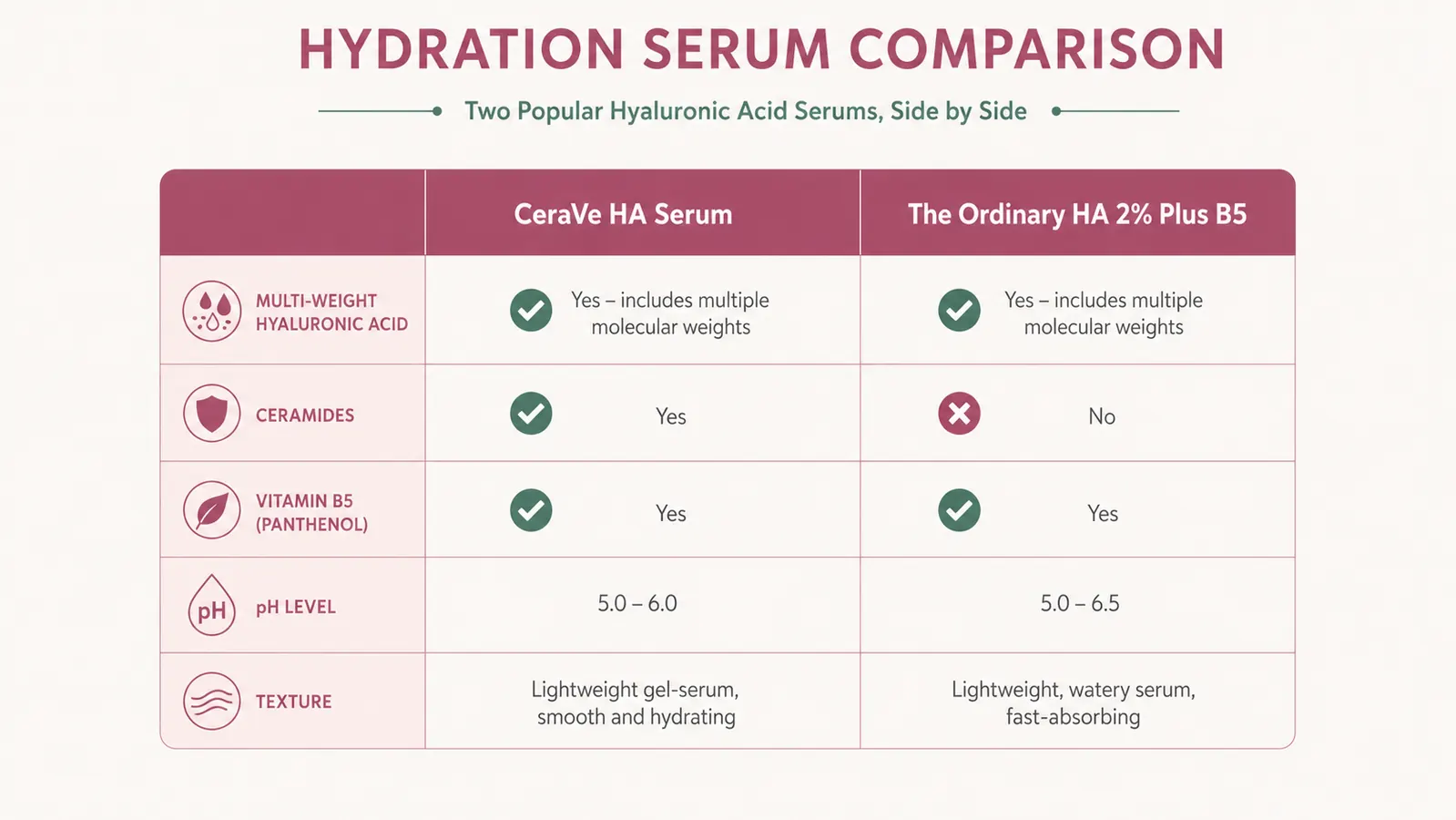
| CeraVe HA Serum | The Ordinary Hyaluronic Acid | |
|---|---|---|
| Price Tier | Mid-low range for 1 fl oz | Budget for 1 fl oz |
| HA Molecular Weights | Three (high, medium, low) | Two (high, low via HA crosspolymer) |
| Ceramides | Yes (ceramides NP, AP, EOP) | No |
| Vitamin B5 | Yes | Yes |
| Texture | Lightweight gel, nearly invisible on skin | Slightly thicker gel, can feel tacky if over-applied |
| Best Skin Type Fit | Dry, combination, sensitive, barrier-compromised | Oily, normal, or minimalist routines |
| Packaging | Pump bottle (hygienic, controls dosage) | Open dropper bottle (requires careful dosing) |
| Fragrance | Fragrance-free | Fragrance-free |
| Amazon Rating | 4.6 stars (30,000+ reviews) | 4.4 stars (widely reviewed) |
Your skin is dry no matter how much moisturizer you use. This serum goes underneath and changes that.
The CeraVe HA Serum combines three molecular weights of hyaluronic acid with ceramides to hydrate at multiple skin levels while supporting your barrier at the same time. Rated 4.6 stars across more than 30,000 reviews.
Amazon Check Today's Price on Amazon →Where CeraVe Wins
The most significant difference between these two formulas is one that the ingredient list does not make obvious at first glance: molecular weight distribution. CeraVe uses three tiers of hyaluronic acid. High molecular weight HA sits on the surface and forms a light film that reduces transepidermal water loss. Medium molecular weight penetrates a little deeper into the upper layers of the skin. Low molecular weight, sometimes called sodium hyaluronate, reaches into the upper dermis and hydrates from a structural level. The result is a more layered hydration effect than a single-weight formula can produce.
The ceramides are the second reason I lean toward CeraVe for most people. Ceramides NP, AP, and EOP are the same lipid molecules your skin barrier is partly built from. When your barrier is weakened by cold weather, over-cleansing, or active ingredients like retinol and acids, replenishing those lipids helps it recover. The Ordinary formula does not include ceramides. That does not make it a weak product, but it does mean it is not doing the barrier-repair work that CeraVe is doing alongside the hydration. For anyone whose skin is reactive, dry, or going through a correction phase, that distinction matters.
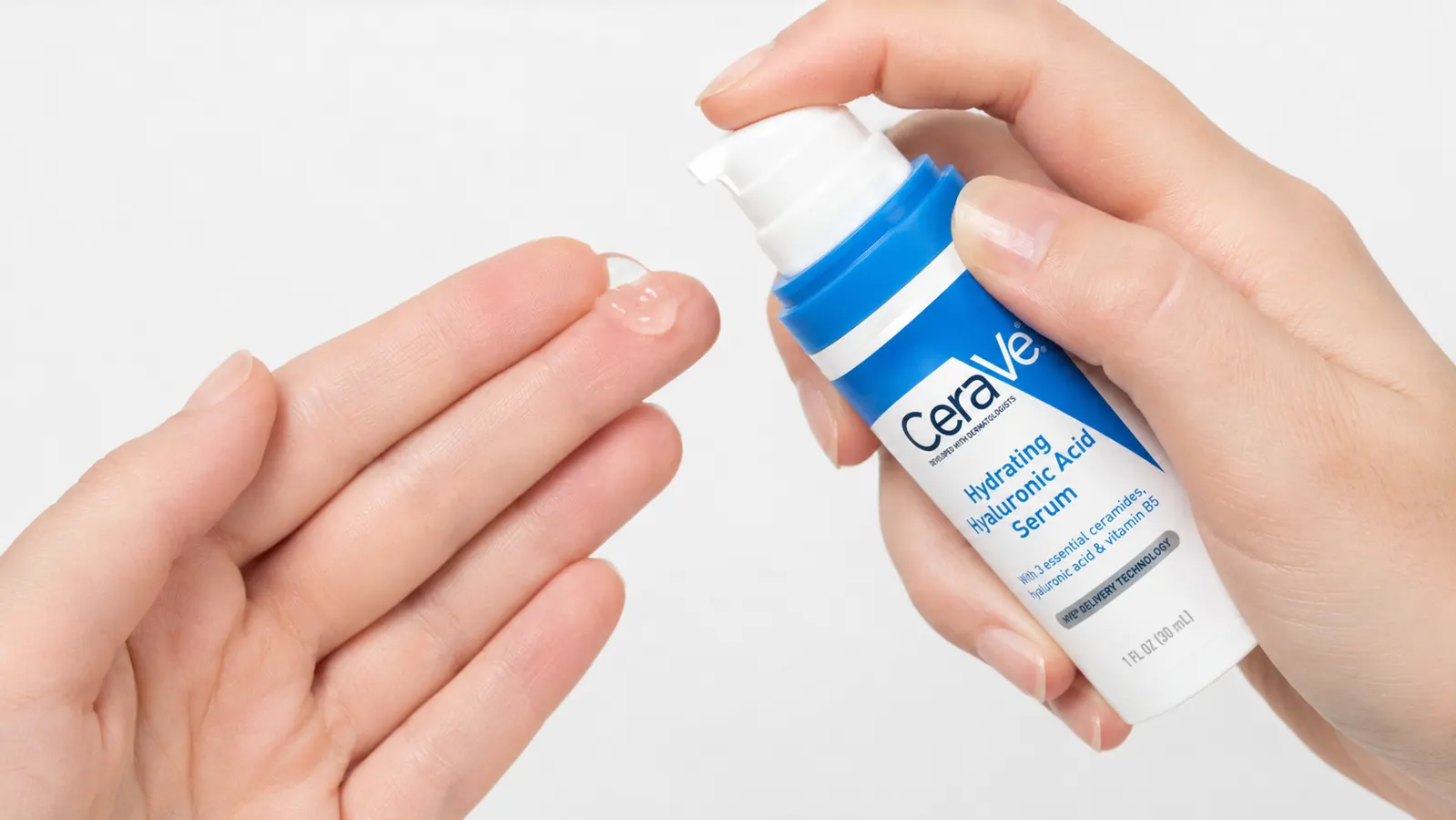
The pump dispenser also deserves a mention. I know packaging sounds like a minor detail, but with HA serums it is not. Hyaluronic acid is highly susceptible to contamination and oxidation, especially in a dropper bottle that gets handled daily. The pump on the CeraVe bottle keeps the formula sealed until you press it, delivers a consistent one-to-two pump dose with no guessing, and keeps your fingers out of the product. After going back and forth between formats for months, I noticed the CeraVe bottle showed no change in texture or scent even at the end of the bottle. The Ordinary's dropper bottle performed fine, but the open-tip format requires more care with how you store and handle it.
Where The Ordinary Wins
The Ordinary Hyaluronic Acid 2% + B5 wins on price, and for a specific user profile, the price advantage is real and meaningful. At roughly $7 per bottle versus roughly $17 for CeraVe, you are looking at a 58 percent cost difference for a product you use daily. If you have oily or normal skin that does not need barrier support, and your routine already includes products that address skin-barrier health through other means, the extra spend on CeraVe may not translate into a visible result difference. You would essentially be paying more for ingredients your skin may not need in this particular step.
The Ordinary formula also layers better under silicone-based products and heavier moisturizers. Because it does not contain the lipid molecules found in ceramide-enriched formulas, it tends to sit more cleanly under products with a richer base. Some users in oily-skin communities specifically prefer it for this reason, noting that the CeraVe formula, while not heavy, feels slightly more present on the skin at application. If your skin runs oily and you want a serum that essentially disappears before you layer anything on top, The Ordinary version is worth testing. For oily skin types, hyaluronic acid is still useful because dehydration and oiliness are not the same thing, and a lightweight HA layer can actually reduce compensatory oil production over time.
The CeraVe formula is doing two jobs at once: hydrating and reinforcing the barrier. The Ordinary is doing one job very cleanly. Neither is wrong. The question is what your skin actually needs right now.
The Ingredient Details Worth Understanding
One thing I want to clarify because I see it confused in reviews: having a higher concentration of hyaluronic acid does not automatically mean better hydration. The Ordinary formula is labeled 2% HA plus B5. CeraVe does not list a precise HA percentage. What matters more than the labeled percentage is the molecular weight breakdown and the supporting cast of ingredients. A 2% high-molecular-weight HA sitting on the surface can cause mild tightening in dry or low-humidity environments because high-MW HA draws moisture from the environment. If the environment is dry, it will pull from your skin instead. The multi-weight approach in CeraVe mitigates this by also putting low-MW HA deeper in the skin where it has more moisture to work with.
Vitamin B5 (panthenol) appears in both formulas. It is a humectant and a wound-healing support ingredient. It enhances HA's hydration effect and helps with skin softness and recovery from minor surface irritation. Its presence in both products is a point in favor of both, and at similar concentrations it is not a meaningful differentiator between them. The place where B5 matters more is in combination with a barrier-support ingredient, which is why its pairing with ceramides in the CeraVe formula makes it functionally more complete.
Neither product contains fragrance, which is a genuine plus for anyone with reactive skin. Both are non-comedogenic. Both have a slightly acidic pH, which keeps them compatible with most other serums. I have layered both under niacinamide, under a simple peptide moisturizer, and under retinol without any pilling or incompatibility issues. That flexibility matters because most people reaching for a HA serum are already using at least one other active ingredient and do not want to audit their entire routine to accommodate a new step.

Application and Feel on Skin
Both serums apply to damp skin for best results. This is important: hyaluronic acid works by absorbing water, so if you apply it to completely dry skin in a dry room, you are limiting its effectiveness. I apply mine right after rinsing my face and leaving a light amount of water on the surface. Two pumps of the CeraVe formula covers my entire face and neck with a small amount left over. It absorbs in about 20 to 30 seconds and leaves a faintly dewy surface that is ready for moisturizer immediately.
The Ordinary formula requires a little more attention to dose. Three to four drops covers the same area, but because it comes out of an open dropper, it is easy to accidentally dispense too much. When you over-apply The Ordinary formula, it can leave a slightly tacky or almost film-like feeling that does not fully absorb before you try to layer on top. I have found that warming a few drops between my palms and pressing them into skin, rather than spreading, gives a better finish. Once you have the technique down it is not a problem, but it requires a little more intentionality than the pump format.
One practical note on timing: I use my HA serum in the morning, right after cleansing and before any antioxidant serum or moisturizer. Some people also use it at night. Both serums work well in either slot. The CeraVe formula has a slight edge for nighttime use because the ceramides support barrier recovery while you sleep, but the difference is subtle and neither is a wrong choice for morning or evening.
Who Should Buy Which
Choose the CeraVe Hyaluronic Acid Serum if your skin feels tight, dry, or sensitized on a regular basis. If you are using any active ingredients like retinol, AHAs, BHAs, or prescription treatments, the ceramide content gives your barrier support that a pure HA formula will not. If you have combination skin that feels dry in the cheeks and oily in the T-zone, the multi-weight HA addresses that mix well because it hydrates without adding weight. This is also my recommendation if you are new to serums entirely, because the formula is forgiving and the pump makes it hard to over-apply.
Choose The Ordinary Hyaluronic Acid 2% + B5 if you have genuinely oily or normal skin, no significant barrier issues, and a tighter budget. It is also a reasonable pick if you are already using a ceramide-rich moisturizer and want to avoid stacking the same ingredients in multiple steps. The price point makes it easy to try without committing, and if hydration maintenance is all you need from your serum step, it delivers that reliably.
One situation where I would not recommend The Ordinary version: if you are in a dry or cold climate. High-altitude or low-humidity environments amplify the water-pulling behavior of high-MW HA, and the multi-weight approach in CeraVe handles that more gracefully. I noticed a meaningful difference during a stretch of weeks with dry indoor heating. The CeraVe formula felt comfortable throughout. The Ordinary version left a slight tightness on my drier cheek patches when I forgot to apply moisturizer immediately after. If your home runs dry in winter, that extra layer of protection is worth the additional cost.
Built for skin that needs more than surface hydration. Three HA weights, ceramides, and B5 in one step.
The CeraVe Hyaluronic Acid Serum with Vitamin B5 is the better all-around pick for dry, sensitized, or barrier-compromised skin. More than 30,000 reviews back it up. Check the current price on Amazon before it changes.
Amazon Check Today's Price on Amazon →