
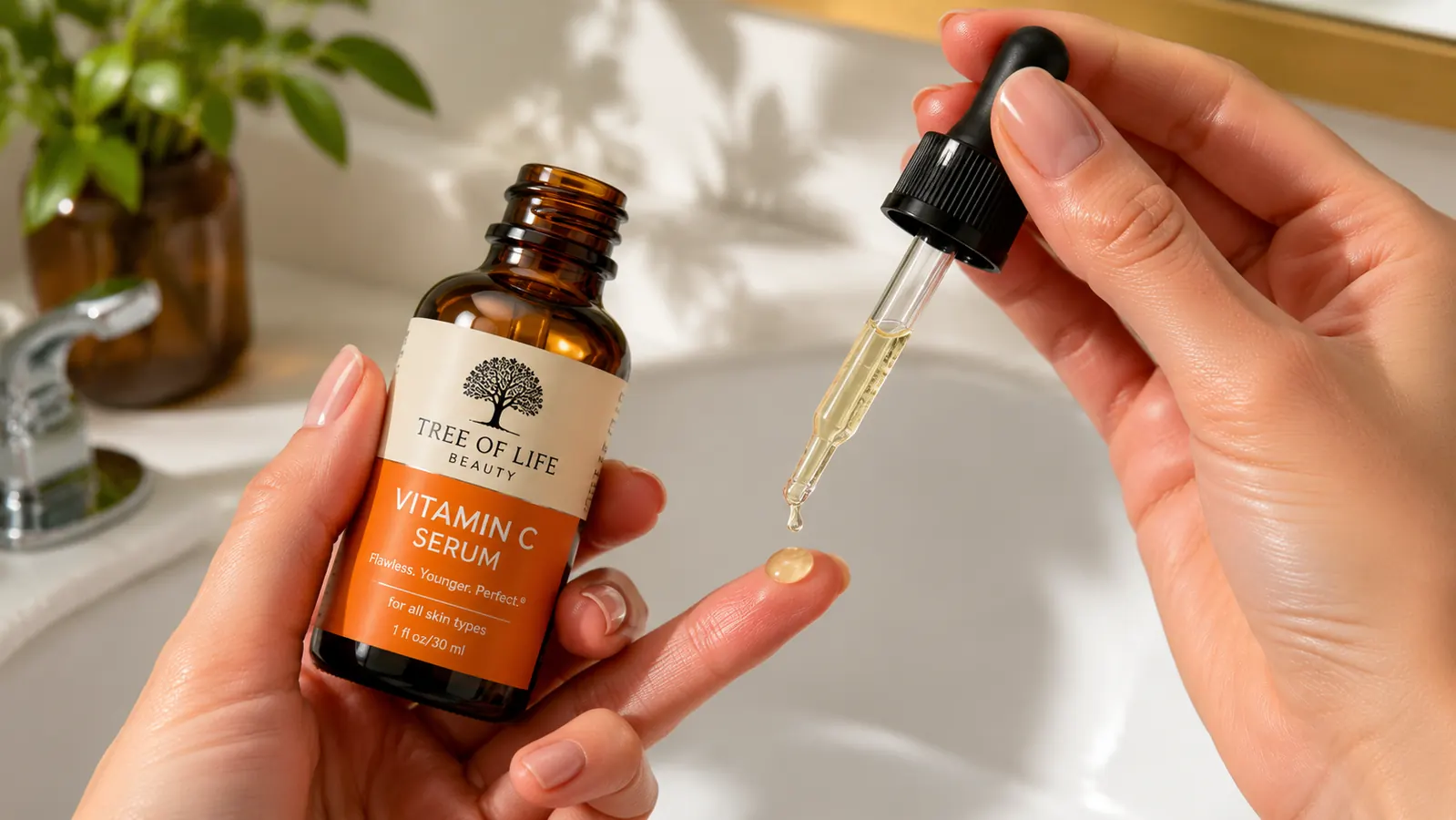
Before I started reviewing skincare for a living, I worked on the buying side at a mid-size specialty retailer. Part of that job was reading the actual ingredient decks on products before they hit shelves, and the habit stuck. So when I picked up the Tree of Life Beauty Vitamin C Skin Care Set, which currently carries over 143,000 ratings on Amazon and a 4.4-star average, my first question was not whether it works. It was: what is actually in the bottle, and does any of it back up the claims? The answers are more nuanced than the product page suggests, and a few of them are the things reviewers rarely mention.
This is the review I wish I had found before buying. Not the version that says it brightened someone's skin and leaves it there, but the version that explains why vitamin C serums turn orange in the bathroom cabinet, why some people feel a tingle and others feel nothing, why the set format is worth considering even if you think you only want the serum, and what the undisclosed concentration actually means for your skin type. I have been using this product for about six weeks, paying closer attention to the formula behavior than to any single result.
The Quick Verdict
A well-constructed entry-level vitamin C serum with the right supporting cast of ingredients, more forgiving on sensitive skin than most at this price, but with a concentration that caps its ceiling for experienced vitamin C users.
Amazon Check Today's Price →If you have been burned by a stinging, pilling, or fast-oxidizing vitamin C serum before, this one is worth a look.
The Tree of Life Vitamin C Skin Care Set includes the serum and a companion face oil. The combination is genuinely useful, and the price makes a six-week trial easy to justify. Check what it is going for right now on Amazon.
Amazon Check Today's Price on Amazon →How I Have Been Using It
My skin is dry with a tendency toward redness around the nose and cheeks. I do not layer actives aggressively. During the six weeks I used this serum, my morning routine was a gentle cleanser, two minutes of wait time, four drops of the Tree of Life Vitamin C serum pressed into still-slightly-damp skin, a fragrance-free moisturizer, and a mineral SPF 50. I did not double up with exfoliating acids on the same mornings. I was not trying to push the formula harder than it needed to go. I wanted to see what it did under normal, sustainable conditions.
I also paid attention to what happened on two mornings when I had used a chemical exfoliant the night before. That is where the tingle showed up. More on that below. The rest of the time, the serum applied smoothly, absorbed within about 45 seconds, and left my skin feeling comfortable under moisturizer. Nothing in my routine pilled. That is a meaningful baseline, because some vitamin C serums interact badly with silicone-containing moisturizers or physical sunscreens and leave a texture that looks like eraser shavings.
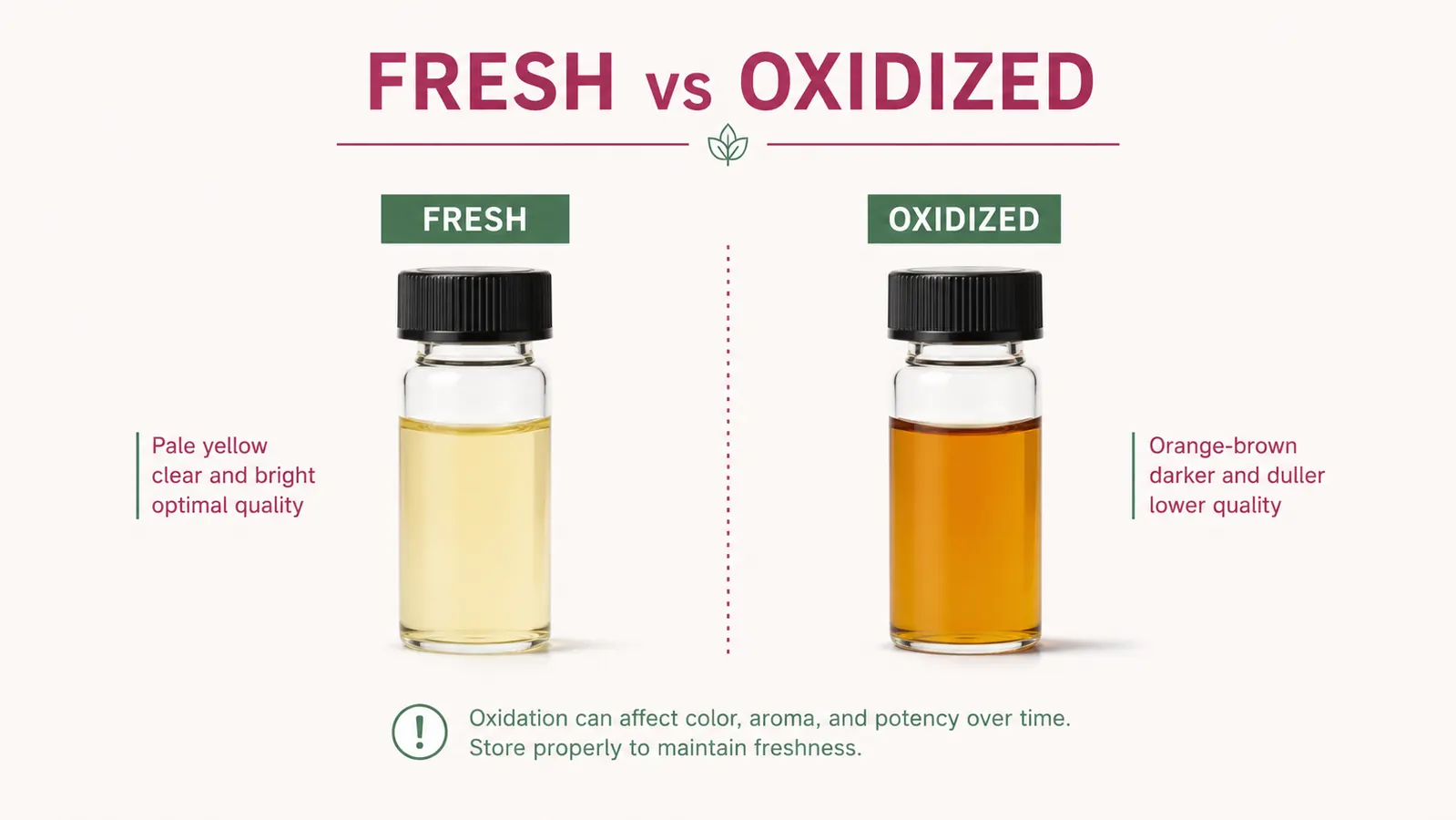
I measured the serum for oxidation signs at weeks two, four, and six by transferring a few drops to a small white ceramic dish in direct daylight and photographing them. Fresh, the serum is a pale straw yellow, almost colorless. At six weeks, stored in a drawer with the cap replaced after every use, it was still that same pale straw color. No orange shift. No bitter metallic smell. That matters enormously for a vitamin C formula and I will explain why in the next section.
The Oxidation Problem Nobody Explains
Vitamin C serums based on L-ascorbic acid are notoriously unstable. L-ascorbic acid reacts with oxygen, light, and heat, and when it does, it converts to dehydroascorbic acid, which is a compound that delivers far less of the brightening and antioxidant benefit you are buying the product for. The visible sign of this conversion is the serum turning orange, then brown. If your bottle of vitamin C serum looks like a small glass of orange juice, it is not doing much for your skin at that point.
The Tree of Life formula slows this process in two ways. The dark amber glass bottle blocks light exposure, which is one of the main triggers for oxidation. And the inclusion of ferulic acid in the formula creates a more chemically stable environment for the L-ascorbic acid to survive in. Ferulic acid lowers the pH slightly and acts as an antioxidant itself, effectively protecting the vitamin C from degrading as fast as it would in a simple aqueous formula. That is why the serum held its color through six weeks of daily use with the cap on correctly. If you leave it open on a windowsill, the story will be different. But used the way it is meant to be used, the formula has been engineered to resist the main failure mode.
One thing that will accelerate oxidation regardless of the bottle design is cross-contamination. If you dip your fingertip directly into the dropper opening, the oils and bacteria from your skin will start degrading the formula faster. Use the dropper to dispense into your palm and never touch the tip to your skin or your hands. I have seen people complain that their vitamin C serum went orange in three weeks and, on follow-up, they were dipping their fingers in daily. The formula was not failing. The storage habit was.
The Tingle: Who Gets It and Why
On two separate mornings during my test period, I noticed a faint warmth and mild tingling for about 30 seconds after applying the serum. Both times followed evenings when I had used a glycolic acid toner at around 5 percent. The tingle faded completely within a minute and left no redness. It did not happen on any other mornings. Understanding why explains something important about how to use this product.
L-ascorbic acid works best at a low pH, around 2.5 to 3.5. At that pH, it penetrates the outer skin barrier and does its job. The glycolic acid from the night before had already lowered the acid mantle of my skin surface and temporarily increased its permeability. When a low-pH vitamin C serum hits already-sensitized skin, the acids interact with more exposed receptor sites and you feel the tingle. On intact, un-exfoliated skin, the surface barrier moderates how much of that pH hits your nerve endings at once. The experience is different, and for most people it will be nonexistent.
This is not a reason to avoid the product. It is a reason to not apply it the morning after a strong exfoliant night. If you use retinoids or AHA/BHA toners, simply build in a buffer: exfoliant at night, skip the vitamin C the next morning, resume the following day. I tested this adjustment and had no tingle issues afterward. The serum is not overly aggressive. It just rewards a little scheduling awareness.
The tingle only appeared after two nights of glycolic acid. On every other morning, the serum absorbed quietly in under a minute, no sensation at all.
Who Actually Gets Irritated and Why
Reading through the negative reviews on Amazon, I noticed a clear pattern. The complaints about burning, redness, or breakouts clustered around a few specific user situations. The most common: people who applied this immediately after a physical scrub or immediately after washing with a foaming sulfate cleanser that stripped their skin barrier. A compromised barrier has less tolerance for low-pH actives, and vitamin C at a working pH will feel aggressive on skin that is already stripped or sensitized.
The second cluster: people who layered it under a high-SPF chemical sunscreen containing oxybenzone or avobenzone. Some chemical filter molecules interact with low-pH serums in a way that causes a brief stinging sensation on application. Switching to a mineral or mineral-hybrid SPF over vitamin C is a small change that eliminates this for most people. The third cluster, smaller but worth naming: people with rosacea or a history of perioral dermatitis who were told by someone online that vitamin C was safe for reactive skin. For many people with those conditions, it is. For some it is not, and that has nothing to do with this specific formula. It is the underlying condition and how acidic actives interact with it.
None of these patterns point to the formula itself being poorly made. They point to application errors and skin-state mismatches. If your skin is intact, your cleanser is gentle, and you are not piling acids on top of each other, the irritation risk with this serum is low. The reviews that say zero irritation outnumber the ones that say burning by a wide margin for that reason.
The Set Versus Buying Just the Serum
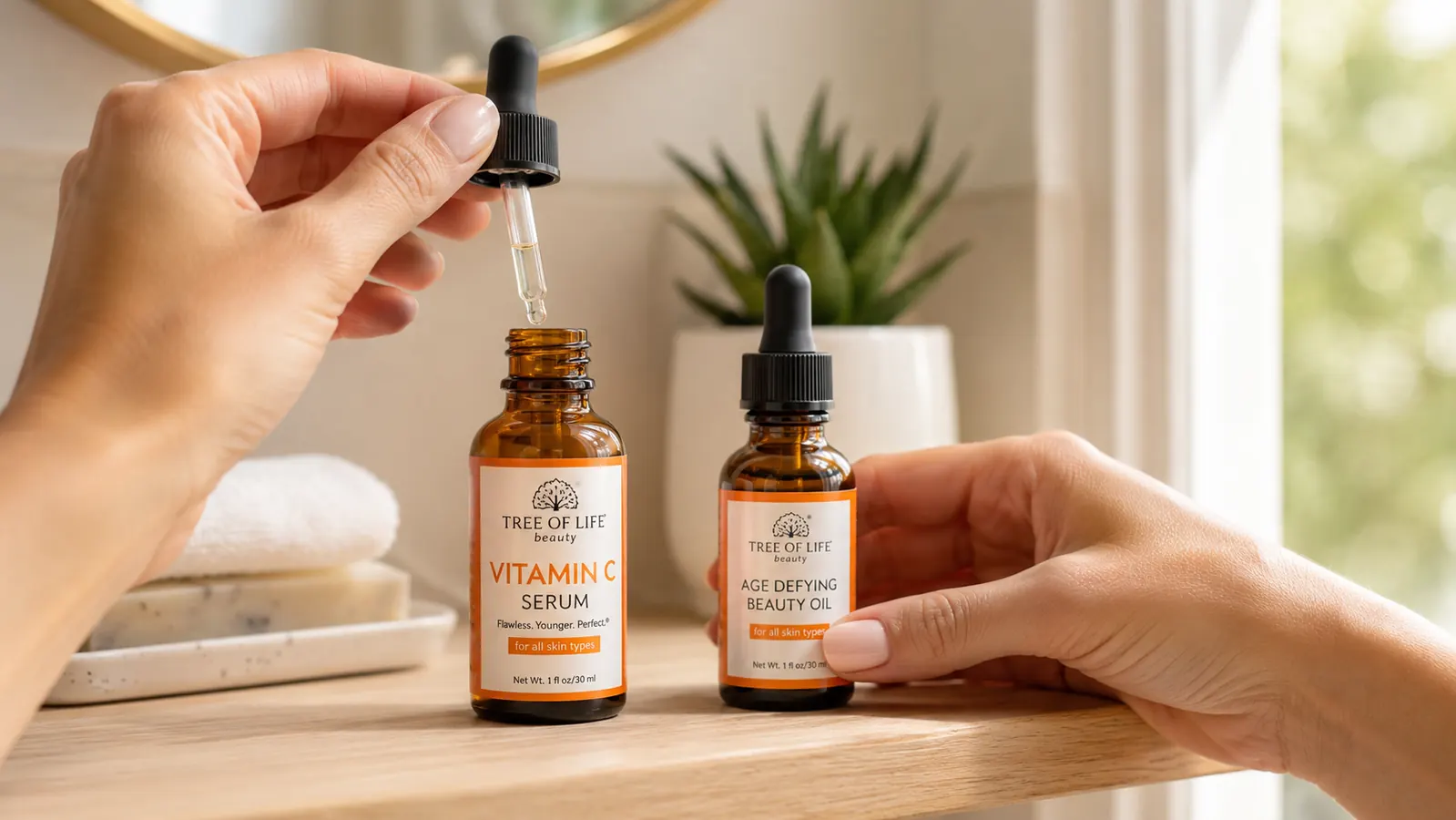
The Tree of Life product sold on Amazon is technically a skin care set. It includes the vitamin C serum and a separate face oil in a smaller bottle. The face oil is lightweight, absorbs reasonably well, and has a faint warm herbal scent that fades within a few minutes. The question people ask is whether the set price is worth it compared to buying a standalone vitamin C serum, or whether the oil is just filler that bumps up the perceived value.
After six weeks, my honest take is that the oil is genuinely useful if your skin runs dry or if you find your face oil is the last thing you reach for on rough-weather days. I applied it two to three evenings a week over a light moisturizer when my cheeks felt tight after being outside in dry air. It layered without clogging and did not break me out. It is not transformative, and it is not a product I would seek out on its own. But as a companion to the serum, it fills a real gap for dry skin types.
For oily or acne-prone skin, the oil may be a non-starter. Oils are not universally pore-clogging, but for skin already prone to congestion, adding one at night is a variable worth skipping. In that case you are really buying the serum and getting a small face oil as a bonus. Given the current price, that is still a fair trade. But set your expectations correctly: the serum is the reason to buy this product. The oil is a nice-to-have that will serve dry skin types well and may get minimal use for everyone else.
What I Liked
- L-ascorbic acid plus vitamin E plus ferulic acid is the correct formulation trio for stability and effectiveness
- Dark amber glass dropper packaging meaningfully slows oxidation when stored correctly
- Very low irritation profile on normal intact skin, even for people with combination or reactive skin types
- Absorbs without a sticky or slippery residue, layers cleanly under moisturizer and SPF
- Face oil in the set is a genuine addition for dry skin types, not throwaway packaging
- Price makes a full six-week evaluation practical without financial pressure
Where It Falls Short
- Vitamin C concentration is undisclosed, likely 10 to 12 percent, which limits speed of results for experienced users
- Tingle occurs when applied after chemical exfoliants unless a buffer day is built in
- Face oil is less useful for oily or acne-prone skin, making the set feel like a single-product purchase for those skin types
- Dropper dispenses more product than needed if the bulb is squeezed too firmly, which reduces the number of uses per bottle
- Results accumulate slowly, not the formula to reach for if visible fading within four weeks is the goal
What the Undisclosed Concentration Tells You
Tree of Life does not publish the percentage of L-ascorbic acid in this formula. That is not unusual for a budget-tier skincare brand. Publishing concentrations invites direct comparison shopping in a way that benefits higher-concentration competitors. What the formula's behavior tells us in practice is that it sits below the level that causes irritation on intact reactive skin, which places it probably in the 10 to 14 percent range. Below 10 percent, clinical literature suggests minimal efficacy for most skin types. Above 15 percent, the odds of sensitization on reactive skin increase meaningfully.
If you are new to vitamin C serums and testing whether your skin tolerates the ingredient at all, this range is a good starting point. You will see results. They will come slowly. That is not a failure of the formula. It is the tradeoff for a gentler product that most people can use without adjusting their whole routine around it. If you have already been using a 15 or 20 percent L-ascorbic acid serum without issue and you are hoping this performs at the same speed, it will not. The ingredient ceiling is lower. For what it is, it performs well. It is just not positioned for advanced vitamin C users.

Who This Is For
The Tree of Life Vitamin C set works well for anyone who has been curious about vitamin C serums but has either been put off by the price of more clinical options or nervous about irritation after hearing people talk about stinging or breakouts. For dry skin types, the included face oil is a practical bonus. For combination skin that is also reactive, the lower concentration and well-buffered formula are more forgiving than many alternatives at a similar price. If your main concern is gradual brightening of dull, uneven skin and you have the patience to evaluate over six to twelve weeks rather than two, this is a reasonable first or repeat purchase. The formulation quality for the price is genuinely above average. I looked at the actual chemistry and nothing in here is cutting corners.
Who Should Skip It
Skip this if you are already using a higher-strength vitamin C serum and want to downgrade without losing results. You will notice the slowdown. Skip it if you have rosacea or perioral dermatitis and have not consulted a dermatologist about whether low-pH acidic actives are appropriate for your condition. Skip it if you are looking for oil control or pore refinement as primary outcomes. Vitamin C is not the ingredient for that job regardless of brand. And skip it if you want visible fading of dark spots within a month, because the concentration here will not move deep pigmentation that quickly. For the right skin type and the right expectations, though, the formula is solid. You can see a full side-by-side comparison of this product against the CeraVe vitamin C serum at our Tree of Life vs CeraVe comparison. And if you want to understand the ingredient mechanisms before committing to any vitamin C serum, the long-term use review covers how the formula behaves over a sustained period.
You came here to find out if the formula is real. It is. The question now is whether your skin type matches what it does well.
The Tree of Life Vitamin C Skin Care Set is currently available on Amazon. The price varies, so it is worth checking what it is selling for today before deciding. The set includes both the serum and the face oil.
Amazon Check Today's Price on Amazon →