
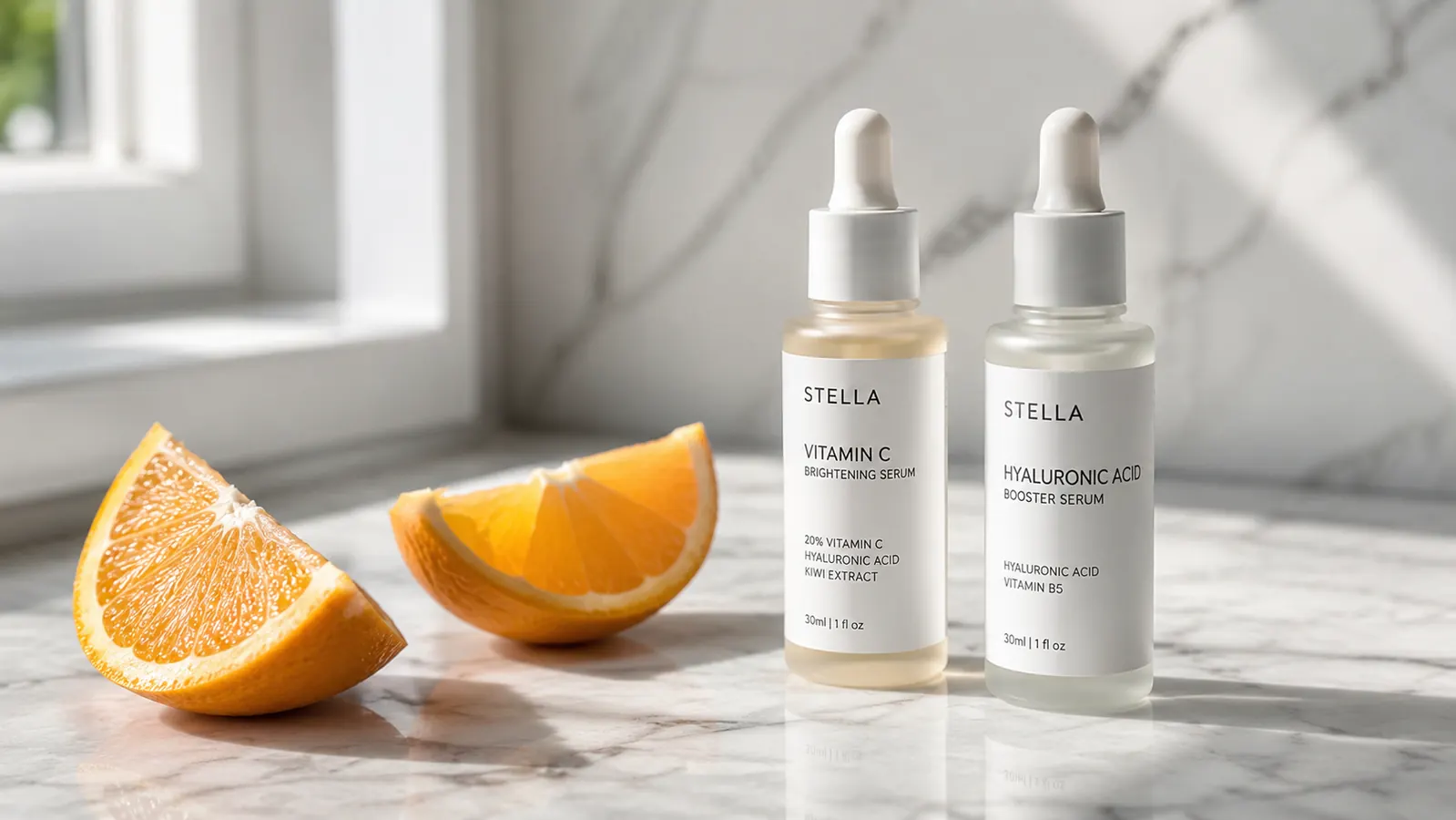
If you have been trying to figure out whether the Tree of Life Vitamin C Serum or the CeraVe vitamin C option is worth your money, you are not alone. Both sit in the affordable range, both appear constantly on Amazon bestseller lists, and both claim to brighten uneven skin tone. The honest answer is that they are not interchangeable. They use different active vitamin C forms, have different textures, and serve different skin situations. I have spent several weeks with both, and this breakdown is meant to save you from buying the wrong one and wondering why you are not seeing results.
The short version: the Tree of Life vitamin C serum is the better pick for most everyday users who want visible brightness improvement on a reasonable budget. The CeraVe vitamin C product is gentler and suits sensitive or reactive skin that cannot tolerate higher-concentration ascorbic acid. Below I work through every meaningful difference so you can make the call for your own skin.
| Tree of Life | CeraVe Vitamin C Serum | |
|---|---|---|
| Price (approximate) | Budget-friendly for the serum set | Affordable for a single serum |
| Vitamin C Form | L-ascorbic acid (active, potent) | Ascorbyl glucoside (stabilized, gentler) |
| Concentration | Higher active concentration, more potent | Lower, stabilized derivative |
| Texture | Lightweight watery-oil hybrid, slight slip | Thin, water-based lotion feel, fast-absorbing |
| Key Added Actives | Vitamin E, ferulic acid, rosehip oil | Niacinamide, hyaluronic acid, ceramides |
| Packaging | Amber dropper bottle, oxidation-protective | Opaque pump bottle |
| Scent | Faint citrus note, dissipates quickly | Virtually unscented |
| Best For | Dull, uneven tone; combination to normal skin | Sensitive or barrier-compromised skin |
| Amazon Rating | 4.4 stars, 143,000 plus reviews | 4.4 stars, solid but fewer reviews |
Your skin looks dull and you have been putting off fixing it. This is the serum most people should try first.
The Tree of Life Vitamin C Serum uses active L-ascorbic acid with ferulic acid and vitamin E, the combination most dermatologists cite when asked what actually works for brightening. Over 143,000 Amazon reviews and a budget-friendly current price make it one of the easiest recommendations on this site.
Amazon Check Today's Price on Amazon →Where Tree of Life Wins
The biggest advantage Tree of Life has over the CeraVe option is the vitamin C form. Tree of Life uses L-ascorbic acid, which is the version your skin can actually use without any conversion step. It is the most researched form of topical vitamin C and has the most evidence behind it for addressing uneven skin tone and supporting collagen synthesis. CeraVe uses ascorbyl glucoside, a stabilized derivative that is gentler but requires your skin to convert it before it does anything active. That conversion is partial and variable across individuals. For most people, L-ascorbic acid simply delivers more visible results within a realistic timeframe.
The supporting ingredients in Tree of Life also do real work. Vitamin E and ferulic acid are not decorative additions. Together they stabilize L-ascorbic acid and extend its activity window on the skin, which is part of why this particular combination appears in serums that cost three to four times as much. The rosehip oil component contributes a small amount of essential fatty acids, which helps the formula sit comfortably on drier skin without feeling heavy or greasy. The amber dropper bottle is a thoughtful packaging choice because L-ascorbic acid oxidizes when exposed to light and air. A clear plastic bottle would degrade the formula within weeks of opening. At the price Tree of Life charges, the fact that they got the packaging right matters.
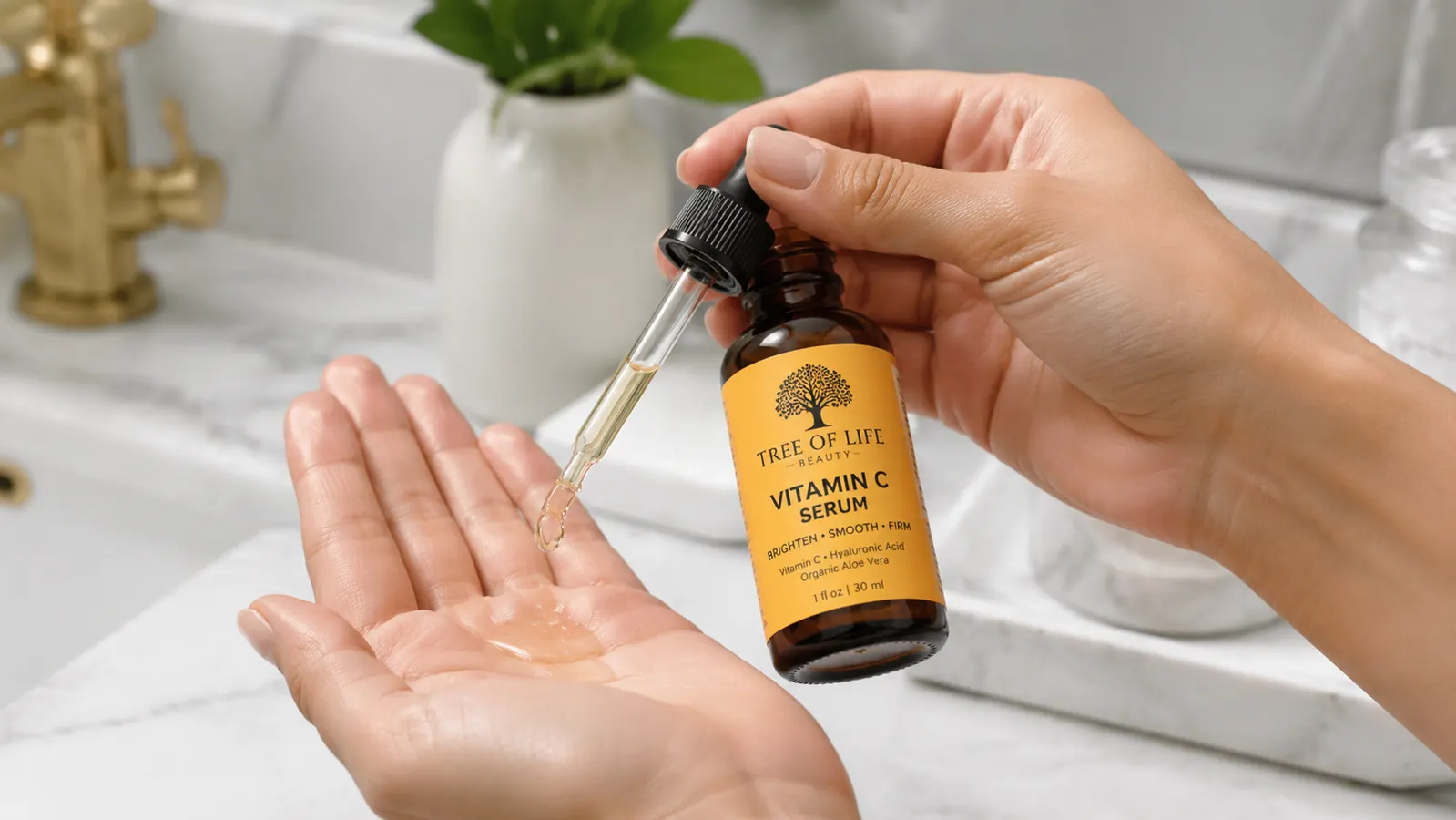
Where CeraVe Wins
If your skin is sensitive, reactive, or currently dealing with a compromised barrier, the CeraVe vitamin C formula may actually be the right call. Ascorbyl glucoside is significantly less likely to cause irritation, stinging, or redness than L-ascorbic acid at active concentrations. If you have tried vitamin C serums before and found them too harsh, this is not necessarily a reason to give up on vitamin C entirely. It may just mean your skin needs the gentler entry point, and CeraVe provides it.
The CeraVe formula also layers in niacinamide, hyaluronic acid, and ceramides. These are ingredients that actively support the skin barrier rather than treating pigmentation directly. That combination makes the product more of a hydration-first serum with some brightening support on the side, rather than a targeted brightening treatment. For someone whose main concern is redness, dryness, or irritation rather than dullness or dark spots, that formula profile may honestly be a better fit. The pump bottle is also a more practical format for thinner water-based textures since it limits air exposure per use.
The vitamin C form matters more than the price. L-ascorbic acid does not need a conversion step. That difference shows up on your skin within a few weeks of consistent use.
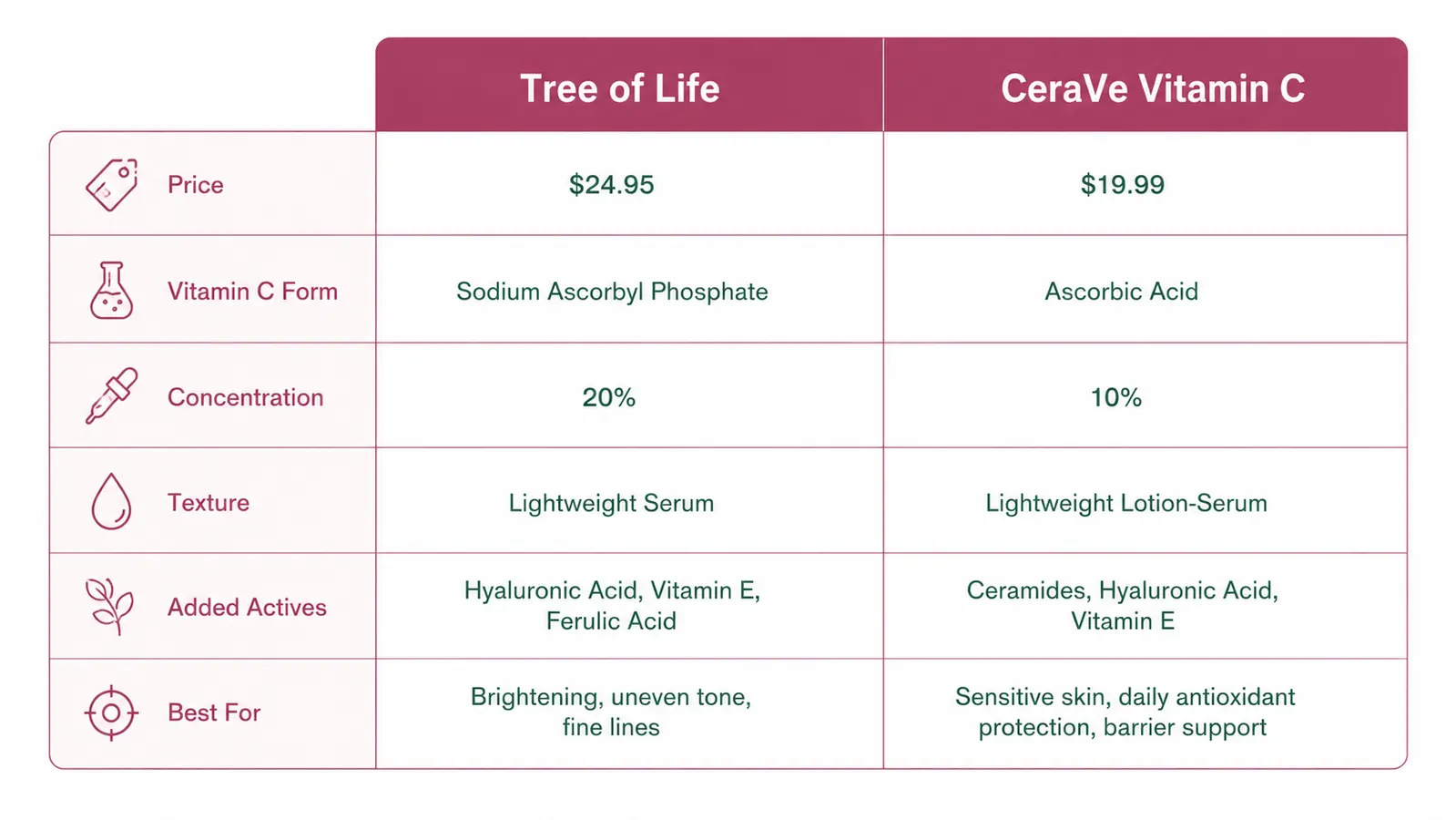
How the Textures Compare in Practice
Tree of Life has a texture I would describe as a watery-oil hybrid. It is not dry like a pure water serum and it is not slick like a face oil. It absorbs within about thirty seconds and does not leave a residue that pills under moisturizer. I have layered it under both a lightweight gel moisturizer and a heavier cream without any compatibility issues. If you have combination skin, you will likely find it works well across both dry and oilier zones of your face without feeling patchy.
CeraVe's vitamin C serum is thinner and more lotion-adjacent in feel. It absorbs almost immediately and leaves virtually no finish at all. That makes it extremely easy to layer beneath anything. If your skin skews dry, you may find you need a more emollient moisturizer over it since the serum itself does not add much occlusion. Neither serum is heavy enough to cause breakouts in the typical sense, but Tree of Life's rosehip oil component could theoretically be an issue for very acne-prone skin that reacts to certain plant oils. In practice this comes up infrequently based on the review record, but it is worth keeping in mind if your skin is congestion-prone.
Results: What to Actually Expect
With Tree of Life, most consistent users report noticing a change in skin brightness and evenness between three and six weeks. This tracks with how L-ascorbic acid works mechanistically: it takes time to influence the melanin pathways that create uneven tone, and results do not come from a single application. The ferulic acid and vitamin E combination appears to extend the window of activity through the day, which may explain why users report results that feel proportionate to the modest price point. If you want a longer account of what daily use over several months actually looks like on combination skin, the full Tree of Life review on this site covers that in detail.
With CeraVe, the brightening results tend to be subtler and slower to appear. The stabilized ascorbyl glucoside form simply works at a lower ceiling for most users. Where CeraVe holds its own is in the hydration and barrier-feel category. Users with dry or sensitized skin often report that their skin feels noticeably more comfortable and less reactive after a few weeks of use. It is doing different work than Tree of Life, and naming that clearly is more useful than declaring one a loser. They have different jobs, and the right one for you depends on what your skin actually needs right now.

Who Should Buy Which
Buy the Tree of Life Vitamin C Serum if your main skin concern is uneven tone, dullness, or post-inflammatory marks left by past blemishes. It is also the right pick if you have used vitamin C before without significant irritation, or if you have combination to normal skin that can handle an active formula. At the current price, it outperforms serums in the mid-to-upper range that use the same core active combination. If you want to understand exactly how to introduce it into your routine without causing irritation or oxidation issues, the brightening guide on this site walks through that process step by step.
Buy the CeraVe vitamin C option if your skin is reactive or prone to redness, if you have had stinging or flushing with other vitamin C serums in the past, or if you are newer to actives and want a gentler starting point before working up to a stronger formula. It is also a reasonable pick if brightening is a secondary priority and your primary concern is hydration and barrier comfort. Just go in knowing that the visible brightening results will be modest compared to what well-formulated L-ascorbic acid delivers over the same period.
A Note on Consistency and Realistic Timelines
Neither of these serums will change your skin in a week. Both require consistent daily use, ideally applied in the morning before sunscreen, to accomplish what topical vitamin C is designed to do. Without SPF on top, you are working against yourself because UV exposure continually drives the pigmentation that vitamin C is meant to address. Using either serum without a broad-spectrum SPF is like bailing out a boat without plugging the leak. That step is not optional if you want results.
The price difference between these two products is real but not the determining factor. The determining factor is your skin type and how your skin responds to active L-ascorbic acid versus a stabilized derivative. For the majority of people who do not have reactive or sensitized skin, the Tree of Life formula delivers more visible brightening for less money. That is the practical conclusion after looking at both formulas and both review records honestly. If you are on the fence, start with Tree of Life and give it six weeks of consistent morning use before drawing any conclusions.
Dull, uneven skin does not fix itself. The Tree of Life Vitamin C Serum is where most people should start.
L-ascorbic acid plus ferulic acid and vitamin E is the combination that shows up across the best-reviewed vitamin C serums at any price. Tree of Life packages it well, protects it in an amber bottle, and prices it affordably. Over 143,000 Amazon customers have rated it 4.4 stars.
Amazon Check Today's Price on Amazon →