
If you have spent any time researching serums for oily or blemish-prone skin, The Ordinary Niacinamide 10% + Zinc 1% has probably appeared in your search results more than once. With over 58,000 ratings on Amazon and a 4.7-star average, the numbers are hard to dismiss. But ratings alone do not tell you whether a formula will work for your specific skin, how to layer it without causing pilling, or why some people react to it even though it is considered a gentle ingredient. That is what this review covers.
I spent several weeks working through this serum methodically: testing it alone, testing it under moisturizer, testing it against vitamin C, and paying attention to what the ingredient list actually implies for skin physiology. The goal was not to confirm what the marketing says. The goal was to figure out who this product genuinely serves and who should look elsewhere.
The Quick Verdict
A well-formulated, high-concentration niacinamide serum at a price point that makes consistent daily use easy to maintain. Most effective for oily, blemish-prone, or large-pore skin. Less useful if your primary concern is fine lines, barrier repair, or redness from sensitivity rather than sebum.
Amazon Check Today's Price →Oily skin and visible pores are the exact problem this formula was built to address.
The Ordinary Niacinamide 10% + Zinc 1% has over 58,000 Amazon ratings and costs less than most coffee orders. If your skin type fits, the barrier to trying it is low.
Amazon Check Today's Price on Amazon →How I've Used It
I introduced the serum into a morning routine on combination-to-oily skin, T-zone shine present by midday, occasional hormonal blemishes along the chin. My existing routine at the time was a foaming cleanser, a lightweight gel moisturizer, and SPF. No actives beyond this serum. I applied three to four drops to clean dry skin every morning, waited roughly 60 seconds, then pressed moisturizer over the top.
I ran that protocol for six weeks before adding any variables. After week six I tested a common layering combination: vitamin C serum first, niacinamide second, to observe the pilling and flushing issue that gets discussed frequently in skincare communities. I also patch-tested the serum on my inner arm for three days before face application, which I recommend to anyone with a history of nicotinic acid flushing or rosacea-like sensitivity.
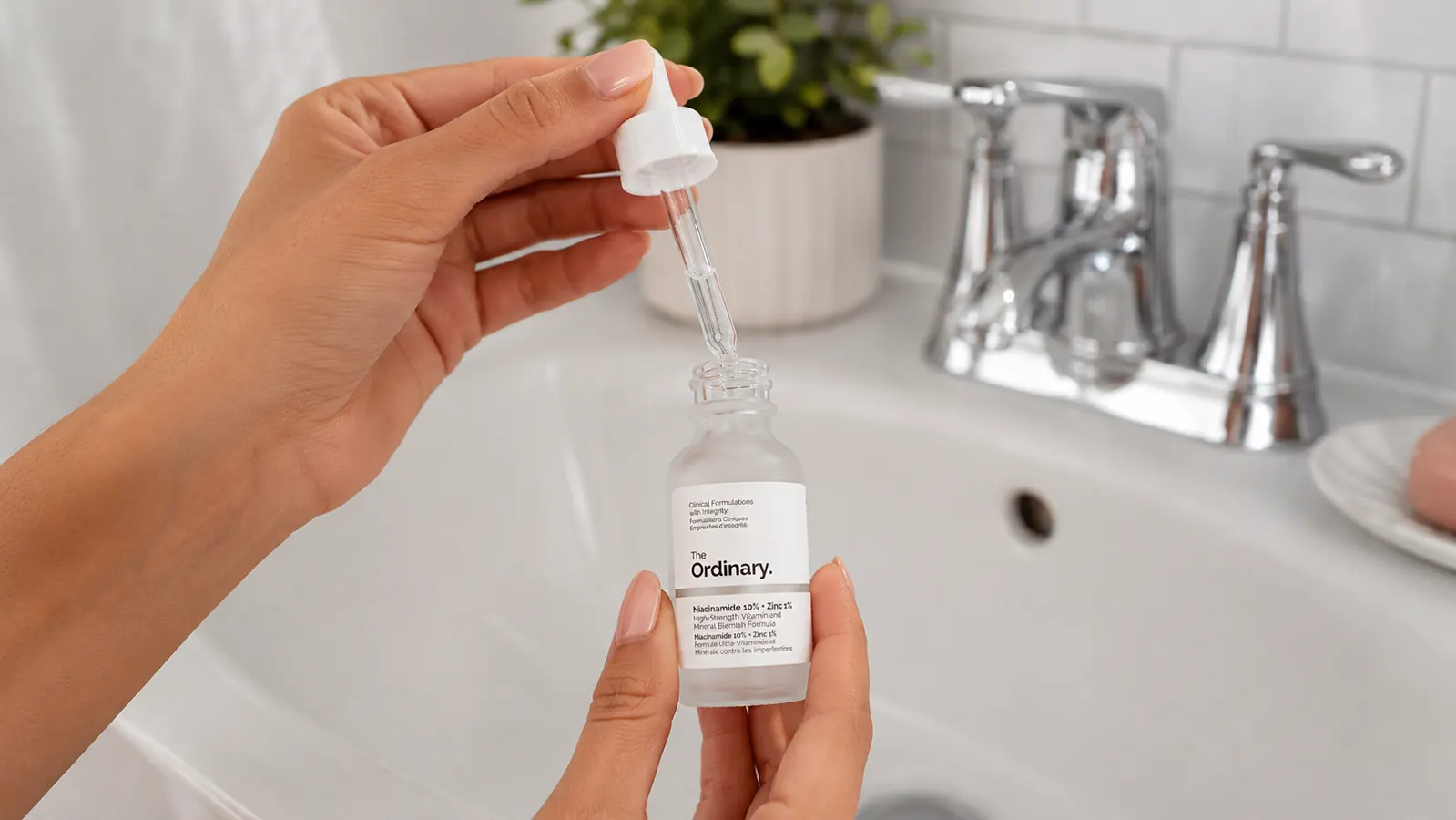
The serum itself is a clear, water-like consistency with almost no scent. It absorbs within about 30 seconds and leaves no residue. There is no stickiness, no tackiness, nothing that would make you feel like you are wearing a product. That texture is genuinely one of its strengths, particularly for people who layer multiple products and have struggled with heaviness or congestion from richer formulas.
What 10% Niacinamide Actually Means for Your Skin
Niacinamide is a form of vitamin B3 that functions as a water-soluble antioxidant with a well-documented effect on sebum production, pore appearance, skin tone, and the skin's barrier function. At concentrations of 2% to 5%, studies show measurable improvements in skin texture and sebum regulation. At 10%, the effect on sebum regulation is more pronounced, and there is evidence of benefit for post-inflammatory hyperpigmentation, the flat brown or pink marks that linger after a blemish clears.
The tradeoff at 10% is that a small percentage of users experience a flushing or tingling response. This happens when niacinamide converts to nicotinic acid on the skin, which causes temporary capillary dilation. It is not a sign of irritation in the traditional sense, and it resolves within 20 to 30 minutes for most people. But if you have visible facial redness as a baseline concern, starting at a lower concentration product and building tolerance over several weeks is the more conservative approach.
For oily and combination skin where shine and enlarged pores are the primary complaints, 10% is where the observable results tend to show up consistently. At lower concentrations you may see some improvement, but the effect is subtler and takes longer to notice. The Ordinary's formula uses niacinamide as the primary active at full 10% with minimal filler ingredients, which means you are getting a straightforward delivery of the active rather than a diluted blend padded with emollients and fragrance.
What the Zinc 1% Adds and When It Matters
The zinc in this formula is zinc PCA, a chelated form of zinc combined with pyrrolidone carboxylic acid. Zinc PCA is sebostatic, meaning it reduces the activity of sebaceous glands, and it has demonstrated antibacterial properties relevant to acne-causing bacteria. The combination with niacinamide is logical: both target sebum regulation through different pathways, so there is a modest additive effect for skin types where sebum is genuinely the primary driver of congestion.
Where zinc PCA is specifically useful is in cases where blemishes are frequent and sebum overproduction is the cause. If your skin is oily primarily in the T-zone and you experience regular breakouts connected to that oiliness, zinc PCA is a meaningful addition to the formula. If your blemishes are driven by hormonal fluctuation, stress, or an impaired barrier rather than excess sebum, zinc contributes less to the outcome. It is not harmful in those cases, but you should not expect it to solve problems it is not mechanistically designed for.
The zinc PCA targets sebum through a different mechanism than the niacinamide, so the combination is genuinely additive for oily skin. For dry or barrier-compromised skin, zinc adds little and the 10% concentration alone may be more than the skin needs at first.
The Pilling Issue: What Causes It and How to Avoid It
Pilling is probably the most common complaint in the reviews for this serum, and it is worth explaining the cause rather than just telling you to wait longer between layers. The formula uses a silicone base alongside its water-soluble actives. Silicone and certain polymer-based moisturizers do not blend cleanly at the surface, so if you apply a silicone-heavy moisturizer or primer over this serum, the layers interact and roll into small balls when you massage in your next product.
The fix is a combination of product selection and application technique. Water-based or ceramide-based moisturizers applied with gentle pressing rather than rubbing resolve the issue in nearly every case. I tested this serum under four different moisturizers over the course of two weeks. A silicone-heavy SPF moisturizer caused consistent pilling. A plain ceramide moisturizing cream caused none. A lightweight gel moisturizer caused none. A peptide serum followed by the ceramide cream caused none. The serum itself is not defective. The pilling is a layering compatibility issue, and it is entirely solvable.
The vitamin C question is separate. Applying a vitamin C serum and then immediately following with niacinamide can cause a transient flushing response in some people. The practical recommendation is to space them at least 20 minutes apart, or use one in the morning and one at night. I did not notice a dramatic reaction from same-session application, but I noticed the skin felt slightly warmer and looked faintly flushed for about 15 minutes before settling. For people prone to redness, that 15-minute window matters.
A Look at the Full Ingredient List
Beyond the two headline actives, the rest of the formula is intentionally spare. The base is aqua, meaning water, which makes sense for a water-soluble active like niacinamide. Pentylene glycol acts as a humectant and preservative booster. Zinc PCA is listed third, which is high enough on the list to confirm meaningful concentration. There is tamarind seed extract, which provides some viscosity and a trace amount of conditioning for the skin surface.
What is notably absent is fragrance, essential oils, alcohol, and most of the common sensitizing ingredients that appear in products designed to feel luxurious rather than function cleanly. This is consistent with The Ordinary's broader brand philosophy, and it is one of the reasons dermatologists sometimes recommend this formula to patients with sensitive skin as a starting point for niacinamide, even though the 10% concentration carries some flush risk. The short, fragrance-free list reduces the number of variables if you do have a reaction.
The tradeoff is that the formula does not feel like a spa product. There is no slip, no emollient softness, no scent to make the application feel like a ritual. If you are someone who values the sensory experience of skincare as part of a self-care routine, this serum may feel clinical. That is a fair observation, not a flaw. You are paying for a high-concentration active in a minimal delivery system, and the current price reflects exactly that.
Real Results Over Six Weeks
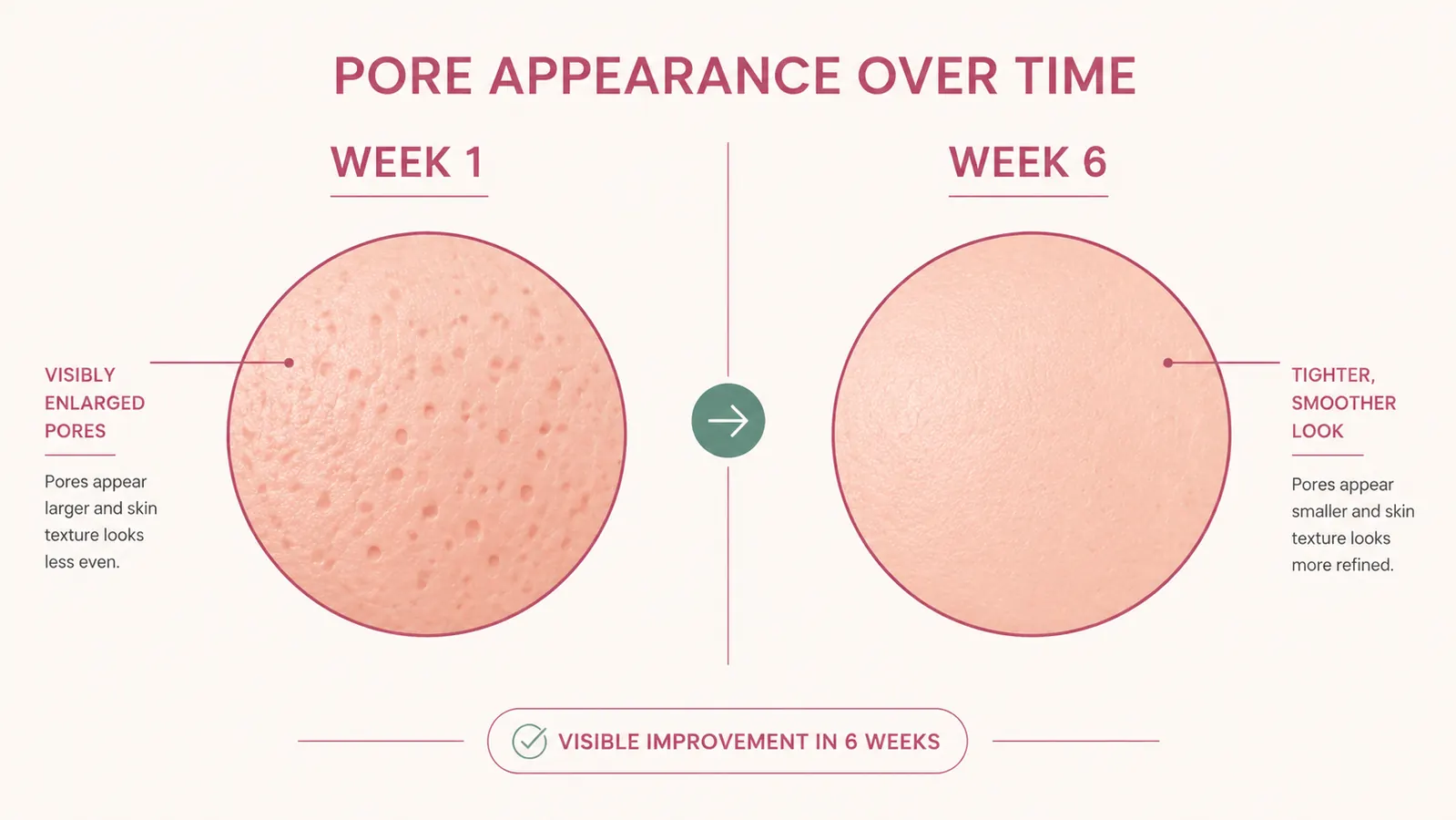
By the end of week two, midday shine was noticeably reduced. Not eliminated, but the point at which I noticed oil on my face shifted from noon to mid-afternoon. By week four, a few shallow post-blemish marks that had been sitting on my chin for weeks were lighter. This aligns with niacinamide's documented effect on melanin transfer, which is the mechanism behind its use for post-inflammatory discoloration.
Pore size visually appeared slightly reduced by week five or six, particularly on the nose. I want to be precise about what this means: niacinamide does not change the structural size of a pore. What it does is reduce the amount of sebum pooling inside the pore, which makes it appear smaller. When you stop using the serum regularly, pores return to their previous appearance over several weeks. This is maintenance rather than permanent change.
There was no change in fine lines over six weeks, which were not my primary concern but worth noting for anyone hoping niacinamide will address wrinkles. It may support collagen synthesis modestly over a much longer period, but six weeks of use on a face without significant line depth did not produce visible textural change in that direction. For fine line concerns, a retinoid or peptide serum is a more targeted option.
What I Liked
- Full 10% niacinamide concentration with minimal filler ingredients
- Zinc PCA adds a second sebum-regulating mechanism that works alongside niacinamide
- Extremely lightweight texture that layers cleanly under most water-based moisturizers
- Fragrance-free, alcohol-free, and short ingredient list reduces sensitization risk
- Measurable reduction in midday shine within two to three weeks for most oily skin types
- Price point makes consistent daily use sustainable without rationing
Where It Falls Short
- Pilling occurs when layered under silicone-heavy products; requires compatible moisturizer selection
- 10% concentration can cause flushing or tingling in users with rosacea-prone or reactive skin
- Should be spaced from vitamin C application to avoid mild flushing and potential temporary redness
- Does not address fine lines, barrier repair, or sensitivity-driven redness in a meaningful way
- Results on pore appearance are maintenance-dependent; discontinuing use allows pores to revert

Who This Is For
This serum is a strong match for oily to combination skin types where the primary complaints are midday shine, visible pores on the nose and central panel, occasional blemishes driven by excess sebum, or post-inflammatory marks that persist after blemishes clear. It is also a reasonable first serum for someone new to active ingredients, because the tolerability profile at 10% is much better than a vitamin C or a low-pH exfoliant, and the short ingredient list makes troubleshooting easier if you do have a question about a reaction.
People who have tried niacinamide at 2% to 5% in a moisturizer and noticed nothing significant will often see a clearer difference from this concentration. The jump from 5% to 10% is not linear in terms of results, but it is meaningful enough that the common experience of 'niacinamide did nothing for my skin' is sometimes a concentration issue rather than a skin-type mismatch. If you stopped before reaching a clinical dose, this formula is worth a reassessment.
Who Should Skip It
If your primary concern is redness from rosacea or reactive sensitivity, this is not the right starting point. The 10% concentration can trigger flushing in rosacea-prone skin, and there are formulas at lower concentrations that provide the barrier-support benefit of niacinamide without the sebum-control intensity. Similarly, if your skin is dry, tight, or barrier-compromised, a ceramide or hyaluronic acid serum addresses the actual problem more directly. Niacinamide supports barrier function at any concentration, but this formula is built and positioned around sebum regulation, and the zinc further orients it that way.
Anyone currently using a vitamin C serum in the morning should plan for the timing issue before adding this product. Spacing the two by 20 minutes or using them at different times of day is a simple fix, but skipping that step is the most common reason people report unexpected redness or a reaction with niacinamide. The product is not to blame in most of those cases. A small adjustment to the routine resolves it.
If oily skin and visible pores are your main complaint, this is one of the most cost-effective ways to address both.
The Ordinary Niacinamide 10% + Zinc 1% has a 4.7-star average from over 58,000 Amazon reviews. At its current price, it is easy to test without a significant financial commitment.
Amazon Check Today's Price on Amazon →